








A Jolt of Colour in the Concrete Grey
The first showers arrive, bringing with them a predictable urban script: flooded streets, traffic snarls, and a general sense of damp melancholy. The city skyline, a familiar mix of concrete towers and tangled wires, dissolves into a monochrome haze.
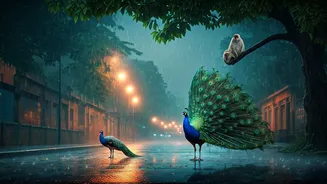
And then, it happens. A sudden, breathtaking contrast appears. Perched on a balcony railing or strutting across a wet road, a peacock unfurls its magnificent train. The sight of its iridescent feathers—a vibrant spectrum of blue, green, and gold—shimmering against the grey backdrop is nothing short of magical. In cities like Mumbai and Delhi, where green spaces are squeezed between high-rises, these encounters feel both surreal and deeply profound. Recently, videos of peacocks roaming Mumbai's Pedder Road after the first monsoon rains went viral, with residents expressing delight at the rare sight. These birds, often venturing from nearby green pockets like Malabar Hill, serve as a living reminder of the wild heart that still beats within the metropolis.
The Soundtrack of the Season
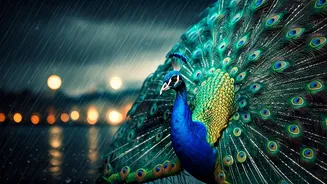
Long before the visual spectacle, the monsoon announces its presence with a sound. It isn't just the rumble of thunder, but the haunting, plaintive call of the peafowl. Described as a yodelling 'myaan-aoon', the sound echoes from rooftops and through dense colonies, a familiar signal to many Indians that the rains are near. This connection is more than folklore; the monsoon coincides with the peafowl's breeding season, which in India can run from April through September. The increased humidity and promise of rain trigger their elaborate courtship rituals. The 'dance' that people associate with rain is, in fact, a stunning courtship display. The male, or peacock, fans his train into a glorious, shimmering arc and quivers, using his plumage to attract a mate. This primal dance, intended for a peahen, becomes a public performance, transforming an ordinary rainy day into a scene of natural theatre.
A Link to Myth and Meaning
The peacock’s connection to the monsoon is woven deep into India's cultural and mythological fabric. Declared the national bird in 1963, its significance stretches back for centuries. In Hindu mythology, the bird is revered. It is the chosen vehicle, or vahana, of Kartikeya, the god of war, and is closely associated with goddesses like Saraswati (knowledge) and Lakshmi (wealth). Perhaps most famously, Lord Krishna is depicted with a peacock feather in his crown, a story that tells of peacocks dancing in joy to the music of his flute. This deep-rooted symbolism elevates the simple act of seeing a peacock to something more meaningful. It's not just wildlife; it's a living piece of heritage. The belief that a peacock’s dance can foretell rain makes every sighting feel auspicious, a blessing for prosperity and a good harvest.
A Shared Urban Habitat
The growing presence of peafowl in urban areas is a complex story of adaptation. These birds have proven to be incredible generalists, thriving in forests and on city rooftops with equal ease. They navigate the urban landscape, finding food and shelter in parks, university campuses, and even amongst discarded items on terraces. While their increasing numbers can sometimes lead to conflict with farmers in rural areas, their appearance in cities is often met with wonder. These sightings remind urban dwellers of the importance of co-existence and the resilience of nature. For a moment, the relentless pace of city life pauses. The sight of a peacock, a creature of myth and wild beauty, calmly navigating the urban rush offers a rare point of connection, a shared moment of wonder that makes the ordinary monsoon feel anything but.