
The Cosmic Threat We Face
Our solar system is not an empty space. It’s filled with millions of rocky and icy bodies, remnants from its formation 4.6 billion years ago. Most of these, known as asteroids and comets, orbit the Sun peacefully. However, the gravitational pull of planets
can nudge them into orbits that cross Earth’s path. These are called Near-Earth Objects, or NEOs. While most NEOs are small and would burn up in our atmosphere, some are large enough to cause significant damage if they were to impact our planet. The goal of planetary defense is not to create panic, but to methodically find and track these objects, particularly those larger than 140 metres, which could cause devastation on a regional scale.
The Eyes on the Sky
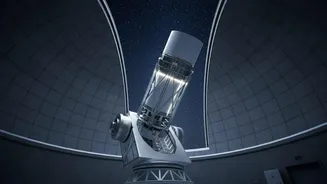
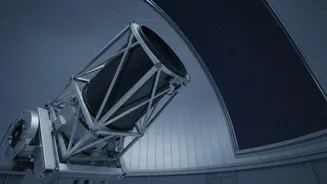
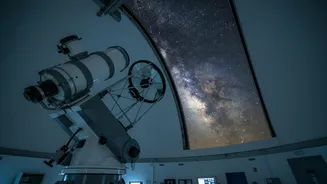
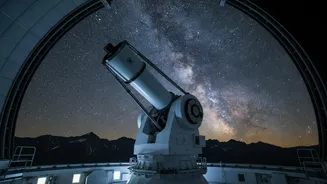
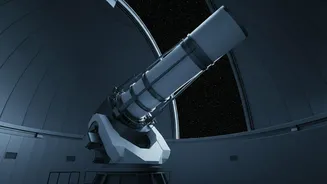
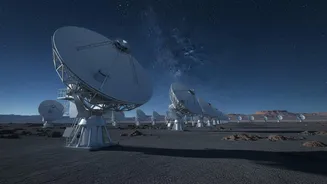
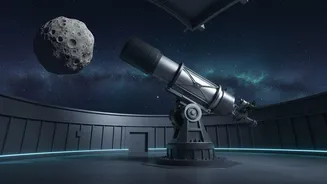
The first line of defence is detection. This critical task falls to a handful of specialised ground-based survey telescopes. Projects like the Catalina Sky Survey (CSS) in Arizona, and the Pan-STARRS and ATLAS systems in Hawai'i, Chile, and South Africa are the workhorses of this effort. These aren't like typical telescopes that stare at one star for hours. Instead, they have wide fields of view and rapidly scan huge portions of the night sky. They operate by taking a series of pictures of the same patch of sky a few minutes apart. Sophisticated software then analyses these images, looking for any dot of light that has moved against the fixed background of distant stars. That moving dot could be a newly discovered asteroid.
A Global Network of Confirmation
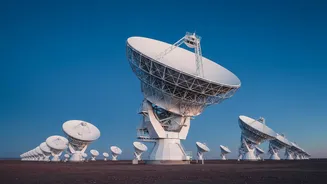
Finding a moving dot is just the beginning. A single detection isn’t enough to know where the object is going. This is where the 'network' part becomes crucial. As soon as a survey telescope makes a potential detection, it sends the coordinates to the Minor Planet Center (MPC), an international clearinghouse sanctioned by the International Astronomical Union. The MPC immediately makes this data public, allowing other observatories around the world—both professional and amateur—to perform follow-up observations. By combining data from different locations over several nights, astronomers can precisely calculate the object's orbit. This global collaboration is essential for confirming a new discovery and plotting its trajectory through the solar system.
From Orbit to Risk Assessment
Once an asteroid's orbit is well-established, the data is handed off to organisations like NASA's Center for Near-Earth Object Studies (CNEOS) at the Jet Propulsion Laboratory. CNEOS runs powerful computer models that project the asteroid's path far into the future, checking for any potential close approaches or impact risks with Earth for the next century or more. These systems constantly update their predictions as new observational data comes in, refining the orbit and reducing uncertainty. An agency like NASA's Planetary Defense Coordination Office (PDCO) is responsible for communicating any credible threat to government agencies and the public. This systematic process ensures that every known object is continuously monitored.
The Future of Finding Asteroids
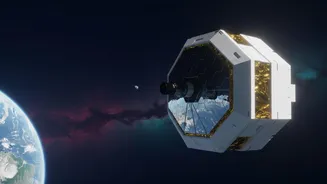
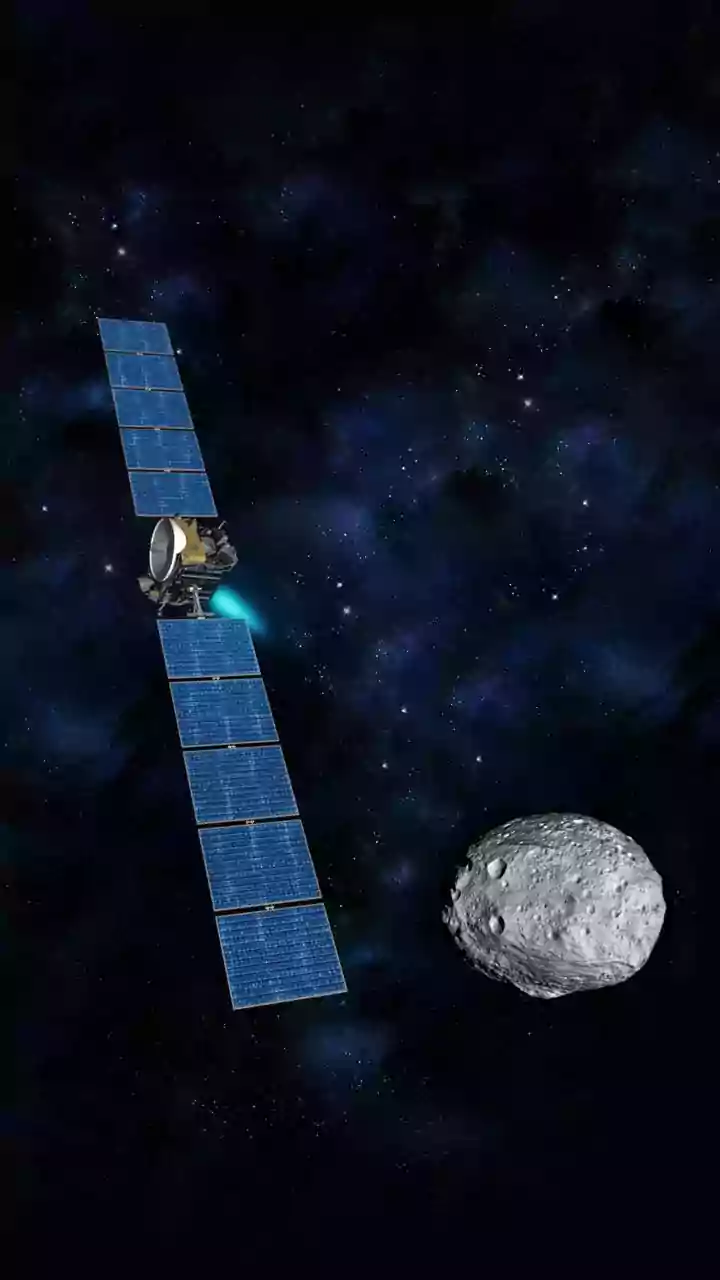
While current ground-based systems are effective, they have limitations. It is difficult for them to spot asteroids approaching from the direction of the Sun. To address this, a new generation of space-based observatories is being developed. NASA’s NEO Surveyor, a space telescope scheduled for launch around 2027, will use infrared sensors to detect the heat signature of asteroids. Operating from a point between Earth and the Sun, it will be able to spot objects that are currently hidden in the Sun's glare. The European Space Agency is planning a similar mission called NEOMIR. These next-generation telescopes will dramatically accelerate our ability to find and catalogue potentially hazardous objects, giving humanity even more time to prepare if a threat is ever detected.