








The Great Urban Squeeze
For a generation of young professionals flocking to cities like Mumbai, Bengaluru, and Gurugram, the dream of an independent life is very real. So is the reality of compact living spaces. The quintessential 'one-BHK' or studio apartment has become the standard
starter home, where every square foot is precious. This spatial constraint is the primary driver behind the surge in multi-functional furniture. Traditional, bulky pieces—a separate large sofa, a dedicated dining table, a guest bed—are luxuries many first-time renters simply cannot afford, not just in terms of price, but in terms of floor space. The need is no longer just for furniture that looks good, but for furniture that works hard. It's a practical response to the high-density urban environments that define modern India.
Beyond the Classic Sofa-cum-Bed
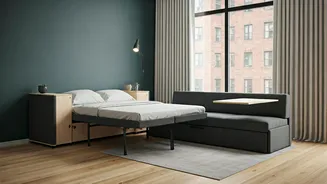
When you hear 'multi-functional', the mind often jumps to the humble sofa-cum-bed. While it remains a popular staple, the innovation in this category has exploded. Online furniture retailers are showcasing a dazzling array of clever designs that cater to the modern Indian lifestyle. Think coffee tables that lift and expand to become work-from-home desks or dining surfaces for four. Consider beds with hydraulic lifts that reveal cavernous storage compartments underneath, eliminating the need for extra cupboards. Nesting tables that can be spread out when guests arrive and tucked away neatly afterwards are best-sellers. Even wall shelves are now designed as modular grids that can be reconfigured as a bookshelf, a media unit, or a display case, adapting as needs change. These pieces are not just about saving space; they're about providing maximum utility with a minimal footprint.
The Flexibility Generation's Mindset
This trend is about more than just cramped apartments; it’s a reflection of a generational mindset. Millennials and Gen Z value experiences over possessions and flexibility over permanence. Many young Indians move cities for jobs or education, and the thought of being tied down by heavy, single-purpose furniture is unappealing. Multi-functional pieces appeal to this nomadic sensibility. A modular sofa can be broken down and reassembled to fit a new living room. An expandable dining table works just as well in a small studio as it might in a future two-BHK. This furniture mirrors their lives: adaptable, efficient, and not overly committed. It’s a move away from the ‘forever’ furniture of their parents’ generation towards pieces that serve the ‘right now’ with style and intelligence.
A Smart Choice for the Wallet
Setting up a first home is an expensive affair. From security deposits to brokerage fees, the initial cash outflow can be significant, leaving a tight budget for furnishing. Herein lies another major appeal of multi-functional furniture: it’s economically sound. Buying one piece that serves two or three functions is almost always cheaper than buying two or three separate items. A bed with built-in storage might seem like a bigger initial investment than a simple frame, but it saves you the cost of a separate wardrobe or chest of drawers. A sofa-bed eliminates the need for a guest mattress. For a young person carefully managing their finances, this isn't just a clever design choice; it's a savvy financial one. It allows them to achieve a fully functional home without breaking the bank, prioritising quality over quantity.
The E-commerce and Design Discovery Effect
The phrase “dominates online carts” is key. The rise of this trend is inextricably linked to the growth of e-commerce. Platforms like Pepperfry, Urban Ladder, and IKEA’s online store have made these innovative designs accessible to everyone, not just those living near specialty furniture showrooms. Buyers can easily compare prices, read reviews, and watch videos demonstrating how a transforming table works. Furthermore, social media platforms like Instagram and Pinterest have become virtual design magazines. A constant stream of aesthetically pleasing images and videos of beautifully organised small spaces has created a powerful aspirational pull. Young consumers see how a small apartment can be both functional and stylish, and they are clicking ‘add to cart’ to replicate that look in their own homes.