




Master the ‘Shoulder Seasons’
The secret to saving money without sacrificing good weather lies in the shoulder seasons. These are the periods just before and after the peak tourist rush. For most of Thailand, including Bangkok and the Andaman Coast (Phuket, Krabi), the high season runs
from November to February. The shoulder months are typically April to June and September to October. During this time, you'll find fewer tourists, and prices for flights and accommodation can drop significantly. While there might be brief afternoon rain showers, especially from July to October, you'll often enjoy long stretches of sunshine and a much more relaxed atmosphere. This 'green season' also means the landscape is at its most lush and vibrant.
Play Regional Weather Roulette
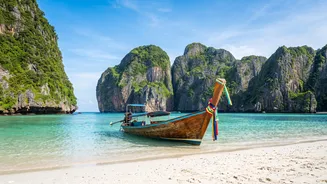
Thailand's weather isn't uniform; different regions have different rainy seasons. This is something savvy travellers can use to their advantage. While the Andaman Coast (Phuket, Krabi) experiences its monsoon from roughly May to October, the Gulf Coast (Koh Samui, Koh Phangan, Koh Tao) has a different pattern. The Gulf's heaviest rain often falls between October and December. This means you can enjoy sunny beach days on the Gulf Coast from June to September, when the other side of the country is at its wettest. By strategically choosing your destination based on these opposing monsoon patterns, you can find a sunny beach with lower prices almost any time of the year.
Book Flights and Hotels the Smart Way
Timing your bookings is almost as important as timing your trip. For international flights, the sweet spot is generally two to four months in advance. Flying mid-week, on a Tuesday or Wednesday, is often cheaper than on weekends. When you arrive, consider flying into Bangkok's Suvarnabhumi Airport (BKK) first, even if your final destination is an island. From there, you can take a low-cost domestic airline to places like Phuket or Chiang Mai for a fraction of the cost of a direct international flight. For accommodation, use booking sites to find deals, but also consider staying in homestays or hostels for a more authentic and budget-friendly experience.
Explore Beyond the Main Hubs
While Phuket and Koh Samui are famous for a reason, Thailand is full of stunning, less-crowded alternatives that offer incredible value. Instead of heading straight for the most popular spots, consider destinations like Khao Sok National Park, with its breathtaking floating bungalows, or the historic ruins of Sukhothai, which are often less crowded than Ayutthaya. Islands like Koh Yao Noi near Krabi or Koh Mook in Trang province provide a peaceful escape with pristine beaches and a glimpse into local life, far from the mass tourism trail. These hidden gems often provide a more authentic experience without the premium price tag.
Live and Eat Like a Local
One of the easiest ways to save money on the ground is to embrace the local lifestyle. Instead of relying on tourist minivans, use public buses or the train system for long-distance travel; overnight trains can even save you the cost of a night's accommodation. For getting around cities, songthaews (shared taxis) are a cheap and authentic alternative to tuk-tuks, which often have inflated tourist prices. The biggest savings, and arguably the best culinary experience, comes from eating at street stalls and night markets. You can enjoy a delicious and filling meal of authentic Thai food for just a couple of dollars.