





Choose the Right Variety
Not all strawberries are created equal, especially for container gardening. For a steady supply of berries throughout the season, 'everbearing' or 'day-neutral' varieties are your best bet. Unlike 'June-bearing' types that produce one large crop over
a few weeks, everbearing varieties like Ostara, Albion, and Seascape are well-suited for pots and will yield multiple, smaller harvests. In Indian conditions, varieties such as Sweet Charlie and Camarosa have also shown good performance for home gardeners. These types produce fewer runners, which means the plant's energy is directed toward producing fruit, making them ideal for the contained space of a pot.
Inspect the Leaves and Crown
When you’re at the nursery, look for plants with vibrant, green leaves. Avoid any with yellowing, brown spots, or signs of pests. A healthy plant should look vigorous and have some new leaf growth emerging from the center. Pay close attention to the 'crown'—the thick, stubby part of the plant where the leaves and roots meet. The crown should be firm and robust. A mushy or dried-out crown is a sign of an unhealthy plant that may be suffering from root rot or dehydration. When planting, ensure this crown sits just above the soil level to prevent it from rotting.
Check for a Healthy Root System
If you can, gently slide the plant out of its nursery pot to inspect the roots. Healthy strawberry roots should be white or light tan and appear plentiful. Dark, mushy, or sparse roots are red flags, indicating potential root rot or poor health. Avoid plants that are 'root-bound', where the roots are circling tightly at the bottom of the pot. While this isn’t a deal-breaker—you can gently tease the roots apart before planting—it’s better to choose a plant with a less constrained root system if possible. Starting with healthy roots gives your plant a strong foundation for growth.
Start with Young, Flower-Free Plants
It can be tempting to buy a plant that already has flowers or even a few small berries on it. However, it's actually better to choose a young plant without them. For the first few weeks after planting in its new home, a strawberry plant should focus all its energy on developing a strong root system. Many experts recommend pinching off any flowers that appear in the first month to encourage robust plant growth, which will lead to a more abundant harvest later on. Buying a plant that is already fruiting means its energy has been diverted away from establishing strong roots.
Select the Perfect Potting Mix
Strawberries thrive in soil that is rich in organic matter but also drains well. Never use heavy garden soil in your pots, as it will compact easily, retain too much water, and can lead to root rot. Instead, choose a high-quality potting mix formulated for containers or edible plants. A great DIY mix can be made from equal parts coco peat, compost or vermicompost, and good quality soil, with a handful of perlite or sand to improve drainage. The ideal soil pH is slightly acidic, between 5.5 and 6.5.
Provide the Right Container
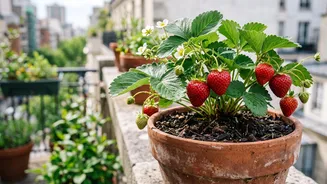
Because strawberries have shallow roots, they do better in pots that are wide rather than extremely deep. A container that is at least 8-12 inches deep and 10-12 inches wide is a good starting point for one or two plants. Rectangular planters or hanging baskets are also excellent choices for a balcony, as they allow the fruit to hang over the edge, keeping it clean and away from damp soil which can cause rot. No matter what you choose, ensure the container has plenty of drainage holes.
Ensure Adequate Sun and Water
Once you have your healthy plant potted up, placement is key. Strawberries need at least six to eight hours of direct sunlight each day to produce sweet, flavourful fruit. A south or west-facing balcony is ideal. Container plants dry out much faster than those in the ground, so check the soil daily. Water thoroughly whenever the top inch of soil feels dry, allowing excess water to drain out from the bottom. Watering at the base of the plant keeps the leaves and fruit dry, helping to prevent fungal diseases.