

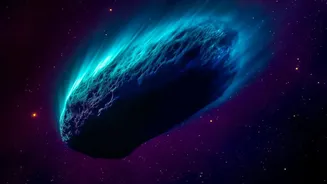
A Visitor from Beyond Our Sun
On July 1, 2025, a NASA-funded telescope in Chile designed to spot potentially hazardous asteroids flagged something unusual. It was an object moving at an incredible speed—far too fast to be gravitationally bound to our Sun. Astronomers quickly confirmed
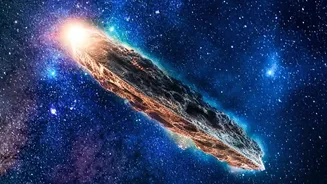
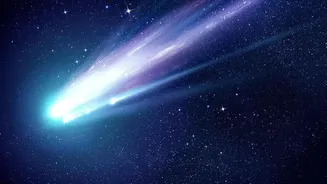
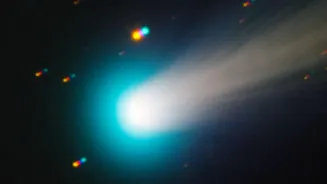
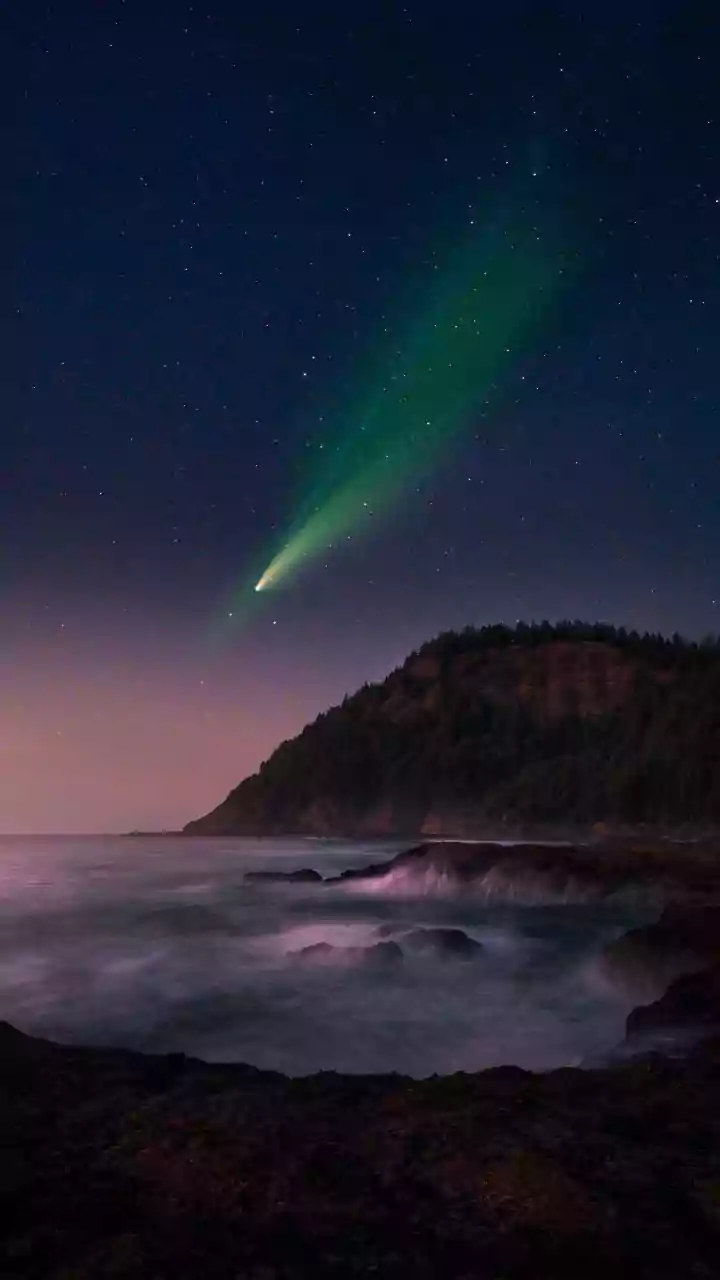
its trajectory was hyperbolic, meaning it was on a one-way trip through our cosmic neighbourhood. This was 3I/ATLAS, only the third interstellar object ever detected by humanity, following the enigmatic 'Oumuamua in 2017 and comet 2I/Borisov in 2019. The '3I' in its name literally means it's the third interstellar visitor, while 'ATLAS' refers to the survey system that found it. Unlike 'Oumuamua, which was a mysterious, rocky object, 3I/ATLAS quickly revealed itself to be an active comet, complete with a fuzzy cloud of gas and dust called a coma.
A Primordial Time Capsule
The real excitement around 3I/ATLAS isn't just that it's from far away; it's that it's a pristine sample of another solar system, delivered right to our doorstep. Comets are often called 'fossils' of planetary formation. They are icy remnants left over from the birth of planets, preserved in a deep freeze for billions of years. By studying comets from our own solar system, scientists piece together how Earth and its neighbours formed. An interstellar comet like 3I/ATLAS offers the same opportunity, but for a completely different and unknown star system. It's a chance to analyse the chemistry of a world-building toolkit from elsewhere in the galaxy, helping scientists understand how unique—or how common—our own cosmic origins might be.
What Scientists Are Learning
Because 3I/ATLAS was detected while it was still inbound and has been very active, it has been a goldmine for observation. As it neared the Sun, its ices began to vaporise, releasing a stream of gases that powerful telescopes like the James Webb Space Telescope and the Very Large Telescope could analyse. These observations revealed a fascinating chemical fingerprint. Early on, the comet's activity was driven by sublimating carbon dioxide, suggesting it formed in an extremely cold environment. The composition was so unusual that some studies suggest the comet could be up to 12 billion years old, potentially making it one of the oldest objects ever observed in our solar system. This kind of detailed chemical analysis was not possible with 'Oumuamua and was more limited with 2I/Borisov, making 3I/ATLAS a truly special case.
The Ongoing Watch
Astronomers are continuing to track 3I/ATLAS as it speeds away on its journey back into the void. After passing its closest point to the Sun in late October 2025, it became observable again and was expected to remain visible to telescopes through much of 2026. Each new observation helps refine our understanding of its size, rotation, and composition. While some fringe speculation initially wondered if it could be an alien technology—a theory quickly dismissed by the scientific community after radio scans found no signals—the true value of 3I/ATLAS is in the fundamental science it enables. It’s a physical piece of another planetary system that we can study up close. This helps answer big questions: Are the building blocks of planets the same everywhere? Do other systems have the same raw materials that eventually led to life on Earth?