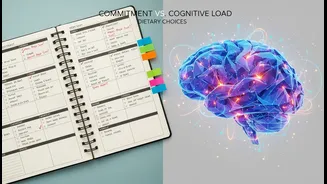









The Allure of the Simple Narrative
As storytellers, it's easy to see the appeal of intermittent fasting. It has clear, quantifiable rules (eat within this window, fast for that long), a touch of self-discipline that feels empowering, and a parade of celebrity endorsements. The narratives
often write themselves: dramatic before-and-afters, testimonials of newfound energy, and the promise of weight loss without counting every calorie. This framework makes for compelling content. It's a classic transformation story, fitting neatly into articles, social media posts, and morning show segments. The problem is that this simple, seductive narrative often sacrifices the complex reality for a clean storyline. It positions IF as an elegant life hack, a straightforward input that guarantees a desirable output. But human bodies and minds are far from straightforward.
The Unspoken Adherence Problem
The most effective diet is one you can stick to, and this is where the popular IF story often crumbles. While studies show IF can be effective for weight loss, its results are often comparable to traditional continuous energy restriction. The bigger issue is long-term adherence. Some meta-analyses show that while short-term adherence can be high, it tends to decline over time. Life gets in the way. Social events, work schedules, family dinners, and stress can make a rigid eating window unsustainable. When we, as writers, focus only on the success stories, we set readers up for a cycle of trial and failure. We imply that if the diet doesn't work, the fault lies with the person's willpower, not the inherent difficulty of the protocol. A more responsible approach involves framing IF as one of many tools, highlighting that long-term adherence is a significant challenge, just as it is with any dietary change.
Beyond Hunger: The Mental Load
The mental and emotional side of intermittent fasting is perhaps the most overlooked part of the story. The popular narrative may mention initial hunger pangs, but it rarely delves into the significant mental load. This includes the constant clock-watching, the anxiety around scheduling social outings, and the decision fatigue that comes from meticulously planning meals within a specific window. More seriously, for some individuals, the restrictive nature of IF can be a gateway to disordered eating. The practice encourages ignoring natural hunger cues, which can lead to a binge-restrict cycle and foster an unhealthy relationship with food. While some proponents report improved mental clarity, others experience mood swings, fatigue, and irritability. For anyone with a history of an eating disorder, experts agree that intermittent fasting is risky and should be avoided. These are not minor side effects; they are profound risks that deserve a prominent place in any story about IF.
Crafting a More Responsible Story
So, how do we tell a better, more honest story about intermittent fasting? It starts with nuanced language. Instead of "effortless," try "structured." Instead of a "magic bullet," call it a "disciplined strategy." The goal is to inform, not to sell a fantasy. First, always put the potential benefits in context with the challenges and risks. This means giving equal weight to the mental load and adherence difficulties. Second, feature a diverse range of expert voices. Talk to dietitians and psychologists who specialize in eating disorders, not just the wellness gurus promoting the trend. Third, explain the state of the science. Many claims are based on small, short-term, or animal studies, and this context is crucial for the reader. Finally, always include a section on who should not try intermittent fasting—including pregnant individuals, those with certain medical conditions, and anyone with a history of or predisposition to eating disorders. By presenting a complete picture, we empower readers to make genuinely informed decisions about their own health.