

Witness the Athachamayam Grand Procession
Onam officially kicks off with the Athachamayam, a spectacular cultural parade held in the royal town of Thripunithura, near Kochi. Historically, this procession marked the journey of the Maharaja of Cochin from his palace. Today, it has transformed into
a vibrant street pageant that showcases the entire spectrum of Kerala's traditional art forms. Expect to see caparisoned elephants, colourful floats, and dozens of folk-art performances like Theyyam, Kummattikali, and Pulikali, all moving to the rhythm of traditional percussion ensembles. Held on the Atham day, ten days before the main Onam day of Thiruvonam, this event is a living museum of culture and the perfect start to the festivities. In 2026, Atham falls on August 16th.
Feel the Roar of Pulikali in Thrissur
On the fourth day of Onam, the streets of Thrissur erupt in a riot of yellow and black for Pulikali, the much-loved 'Tiger Dance'. Performers, with their bodies meticulously painted over hours to resemble tigers and leopards, dance energetically to the powerful beat of instruments like the chenda and thakil. This 200-year-old folk art form, which culminates at the Swaraj Round, sees different local troupes compete to be the best-dressed tigers, often enacting scenes of a hunt. The dedication is immense, with artists observing fasts and undertaking complex rituals before the performance. For visitors, it's a loud, chaotic, and utterly unforgettable spectacle of raw energy and community spirit.
Experience the Ritual of Aranmula Vallamkali
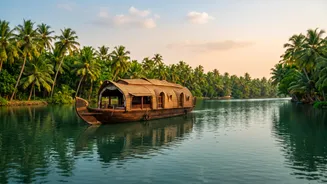
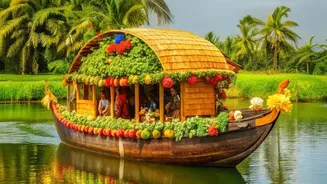
While many boat races in Kerala are competitive sports, the Aranmula Uthrittathi Vallamkali is a sacred ritual. Held on the Pamba River near the Aranmula Parthasarathy Temple, this event is more of a water procession than a race. It commemorates the legend of a divine boat, the Thiruvona Thoni, being protected by snake boats from rival clans. The unique boats, called Palliyodams, are regarded as divine vessels. Watching nearly 50 of these majestic boats, each with over 100 oarsmen dressed in white, glide in unison while chanting traditional 'vanchipattu' songs is a spiritual and mesmerising experience that connects you to the festival's deep-rooted traditions.
Go to the Source at Thrikkakara Temple
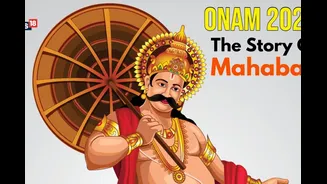
The legend of Onam, celebrating the annual return of King Mahabali, is believed to have originated at the Thrikkakara Temple near Kochi. Dedicated to Vamana, the fifth avatar of Lord Vishnu, this is the epicentre of Onam's religious celebrations. The temple hosts a 10-day festival starting on Atham, featuring flag-hoisting ceremonies, daily rituals, and cultural performances. On the final days of Uthradam and Thiruvonam, the temple serves a massive Onam Sadya (feast) to tens of thousands of devotees, regardless of faith, embodying the spirit of unity and abundance. Visiting Thrikkakara is to witness the myth and the festival become one.
Join a Community Pookalam
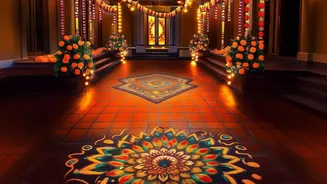
The most visible sign of Onam is the Pookalam, an intricate floral carpet laid out at the entrance of homes and public spaces to welcome King Mahabali. What starts as a small, simple design on Atham day grows larger and more elaborate with each passing day. While making one yourself is an option, the real joy is in seeing the community effort. Many local bodies, organisations, and even start-ups hold Pookalam competitions where you can witness teams creating breathtakingly complex designs using only fresh flower petals. These competitions are a testament to collective creativity and the festive spirit that sweeps across the state.
Savour an Authentic Onam Sadya
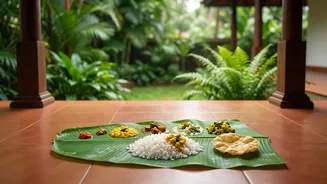
No Onam is complete without the Onam Sadya, a multi-course vegetarian feast served on a banana leaf. With anywhere from 24 to over 28 dishes, it is a culinary masterpiece where every item has its specific place on the leaf. The meal includes a variety of curries like sambar and avial, side dishes like thoran, pickles like inji puli, fried banana chips, and crispy pappadams, culminating in sweet payasams (desserts). While many hotels offer a fine Sadya, for a truly local experience, seek out a community feast at a temple or a local club. The proverb "Kaanam Vittum Onam Unnanam" captures its importance: one must have the Onam feast, even if it means selling one's property.