



The Invisible Challenge of Sealed Environments
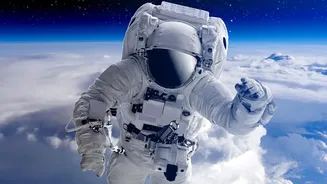
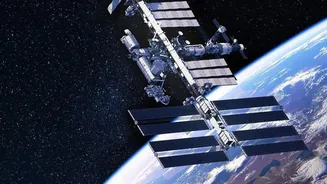
On Earth, our planet’s vast atmosphere and ecosystems naturally handle the carbon dioxide we exhale and the various chemicals we release. In a sealed environment like the International Space Station (ISS) or a future Mars habitat, there's nowhere for
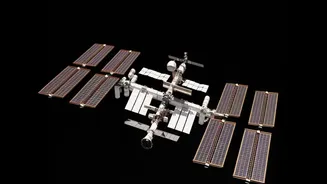
anything to go. Every breath an astronaut exhales releases CO2. Materials off-gas chemicals, and even human activities like cooking and cleaning introduce volatile organic compounds (VOCs) into the air. Without a robust system to manage them, these contaminants would quickly build up to toxic levels, making the habitat unlivable. Maintaining this delicate balance is the core function of an Environmental Control and Life Support System (ECLSS).
The Current State-of-the-Art: The ISS's Air System
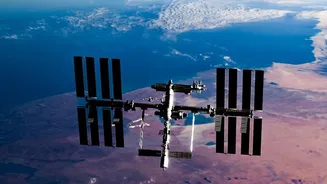
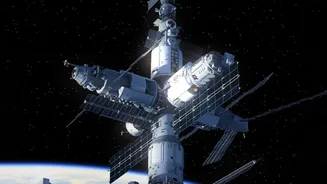
The ISS features one of the most advanced life support systems ever built. Its Air Revitalization System is a complex network of hardware designed to control the atmosphere. A key component is the Carbon Dioxide Removal Assembly (CDRA), which uses beds of tiny, porous zeolite pellets to capture CO2 molecules from the air. These beds are then exposed to the vacuum of space and heated, venting the trapped CO2 overboard. Other systems tackle trace contaminants, while oxygen is generated primarily by splitting water molecules into hydrogen and oxygen through electrolysis. While a marvel of engineering, this system is not a completely closed loop; it requires regular maintenance and resupply from Earth.
The Strain of Long-Duration Missions
The current approach works for low-Earth orbit, but it has significant limitations for future missions to the Moon and Mars. Resupply missions become prohibitively expensive and impractical over such vast distances. Furthermore, current systems like the CDRA require frequent maintenance and part replacements, an issue compounded by their complexity and age. The reliance on venting CO2 overboard is also a waste of a valuable resource. For true long-term habitation, we need systems that are more reliable, more efficient, and, most importantly, regenerative—systems that can close the loop by recycling everything.
Innovating the Air We Breathe in Space
This is where innovation becomes vital. Researchers and engineers are developing next-generation technologies to solve these problems. The Thermal Amine Scrubber and the 4-Bed Carbon Dioxide Scrubber, both tested on the ISS, represent an evolution from the original CDRA, designed for better performance and reliability. Another promising technology uses liquid sorbents, which could eliminate the need for the large, power-hungry blowers used in current systems. Other concepts focus on converting captured CO2 into methane and water using a Sabatier reactor, effectively turning a waste product into a valuable resource and closing the oxygen loop. These physical-chemical systems are crucial stepping stones toward sustainability.
The Ultimate Goal: Bioregenerative Life Support
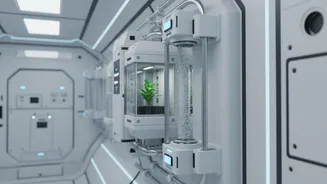
The long-term vision for life support is a fully closed, self-sustaining ecosystem, known as a bioregenerative life support system (BLSS). Instead of relying solely on machines, these systems would use living organisms like plants and algae to produce food, generate oxygen, and purify air and water, much like on Earth. Photosynthetic organisms are incredibly efficient at converting CO2 into breathable oxygen. These biological systems could work in tandem with mechanical systems, creating a hybrid approach that is both robust and highly autonomous. Projects like the European Space Agency's MELiSSA program are actively developing these technologies, paving the way for truly independent space habitats.