



Beyond the 'Earth-like' Box
When we look for life in the cosmos, we tend to search for planets that look a lot like our own. It makes sense; Earth is the only place we know for sure that hosts life. This approach, however, could be what scientists call geocentric—a bias that assumes
Earth is the pinnacle of habitability. The idea behind superhabitable planets, first detailed by scientists René Heller and John Armstrong in 2014, challenges this assumption. They argue that other worlds could exist with conditions even more favourable for the emergence and evolution of life. This doesn't just mean more life, but potentially a greater diversity of it. A team led by geobiologist Dirk Schulze-Makuch has since identified key criteria for what could make a planet 'better' than Earth, giving us a new checklist for our cosmic explorations.
A More Stable Star
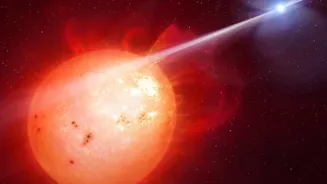
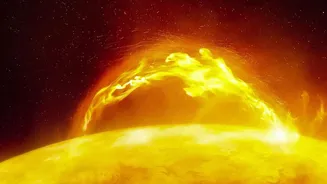
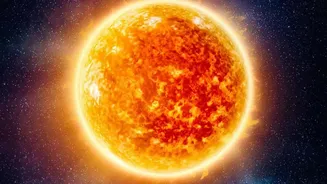
Our Sun, a G-type yellow dwarf star, has served us well, but it's not perfect. It has a lifespan of about 10 billion years, and we're already halfway through. K-type orange dwarf stars, which are slightly cooler and less massive, are emerging as potentially better hosts for life. These 'Goldilocks stars' have much longer lifespans, ranging from 15 to 45 billion years. This extended period of stability gives complex life more time to evolve. Furthermore, K-dwarfs emit less harmful X-ray and UV radiation than the more common but volatile M-type red dwarfs, and are more stable than sun-like stars, providing a steadier environment over cosmic timescales.
Bigger, Warmer, and Wetter
Size and composition matter. A planet that is slightly larger—up to 1.5 times the radius and about twice Earth's mass—could be more hospitable. Stronger gravity would help it retain its atmosphere more effectively. More mass also means more internal heat from radioactive decay, which drives plate tectonics for longer. This geological recycling is crucial for regulating climate and creating diverse habitats. A world that is also slightly warmer and wetter than Earth could be a biological paradise. An average surface temperature around 25°C (77°F) could support larger and more diverse biomes, similar to Earth's tropical rainforests, which are hotspots of biodiversity. A denser atmosphere could help trap heat, moderate the climate, and offer better protection from cosmic radiation.
The Importance of Oceans and Moons
The layout of a planet's surface is also key. While Earth is 70% water, our large, contiguous continents create vast, dry interiors. A superhabitable planet might have a similar amount of water but distributed more evenly across many smaller landmasses, creating more shallow seas and coastlines where life tends to thrive. Shallow oceans allow more light to penetrate, fueling aquatic ecosystems. A large moon, like Earth's, is also considered a major asset. It stabilises the planet's axial tilt, preventing wild climate swings that could be detrimental to life. A slightly larger moon, or even a system of several moons, could provide even greater stability and generate stronger tides, which may have been a crucial factor in the origin of life on Earth.
Are There Any Candidates Out There?
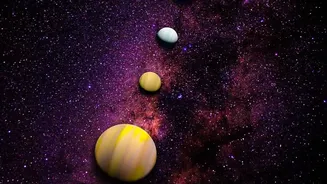
So, do we know of any superhabitable planets? Not for sure, but there are candidates. Using the criteria for superhabitability, Schulze-Makuch's team scoured the Kepler space telescope's archive of over 4,500 exoplanets. They identified two dozen top contenders that are more than 100 light-years away. Planets like Kepler-69c and Kepler-1126b were flagged, although further study is needed to know if they truly fit the bill. One of the most promising candidates is KOI-5715.01, a planet estimated to be about 5.5 billion years old, orbiting a stable orange dwarf. These are not confirmed superhabitable worlds, but rather targets for future, more powerful observatories like the James Webb Space Telescope to investigate further.