





What Exactly Is Being Proposed?
The core of the discussion revolves around introducing a Merchant Discount Rate (MDR) on certain UPI transactions. This isn't a blanket fee on all payments. The focus is specifically on Person-to-Merchant (P2M) payments, and only those above a certain threshold,
potentially ₹2,000. Crucially, the government has clarified that Person-to-Person (P2P) transfers—like sending money to friends or family—will remain free. The proposal is part of a recent legislative amendment that gives the government the power to allow such charges, but does not impose them immediately. Any final decision on the rate and threshold would be made by a committee led by the National Payments Corporation of India (NPCI).
The Core Issue: Why Consider Fees Now?
While UPI is free for users, it is not free to operate. Banks, payment service providers, and the NPCI incur significant costs to run the vast infrastructure, ensure security, and process billions of transactions. Since January 2020, a zero-MDR framework has been in place to drive adoption. However, industry stakeholders have consistently argued that this model is not financially sustainable in the long run. A fee structure, they argue, would create a necessary revenue stream to compensate the players involved, fund technological upgrades, and ensure the system's long-term health and security. The government has previously supported the ecosystem with incentives, but is now exploring a more permanent revenue model.
Who Would Actually Pay?
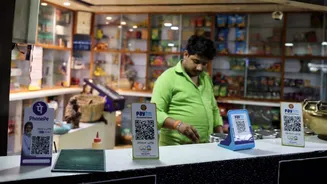
The government has been clear that consumers will not be charged for using UPI. The proposed MDR would be a fee paid by merchants to their bank and payment service provider for processing the transaction. The plan is to target larger merchants, possibly those with an annual turnover exceeding a high threshold, such as ₹1.5 crore. This is intended to protect small, neighbourhood shops from any new financial burden. However, as with any business cost, it's possible that some merchants could eventually pass this fee on to consumers in the form of slightly higher prices. The proposed rates, around 0.25% to 0.5%, are expected to be lower than the MDR currently charged on most credit and debit card transactions.
The Debate: Sustainability vs. Mass Adoption
The proposal has sparked a significant debate. On one side, banks and many fintech companies argue that a sustainable revenue model is essential for continued investment in innovation and security. They believe that without it, the quality and reliability of the UPI network could suffer as transaction volumes continue to explode. On the other side, merchant associations and some consumer advocates worry that any fee, no matter how small, could discourage the use of digital payments. They fear it might push price-sensitive small businesses and their customers back towards cash, potentially undermining the progress made under the 'Digital India' initiative. The government's challenge is to find a balance that ensures financial viability without slowing down UPI's incredible growth.
What Happens Next?
It's important to remember that this is a proposal, not a final decision. The Taxation and Other Laws (Amendment) Bill, 2026, simply creates a legal framework that would permit these charges in the future. It is an enabling provision. The next step involves the UPI and Services Steering Committee, led by the NPCI, which will deliberate on whether to introduce an MDR, what the thresholds should be, and the exact rates. This process will likely involve extensive consultations with banks, payment companies, merchants, and other stakeholders. For now, all UPI transactions remain free for all users and merchants, and any changes are likely to be implemented carefully and with advance notice.