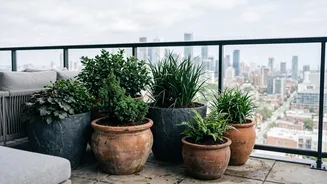








The shift to cooler months brings a fierce challenge for urban gardeners: strong seasonal winds that can wreak havoc on a high-rise balcony. Protecting your potted plants from toppling and drying out is key to a thriving garden in the sky.
Start with a Stable Foundation
The first line
of defense against wind is gravity. Lightweight plastic pots may be convenient, but they are easily toppled by strong gusts. Opt for heavier materials like concrete, thick glazed ceramic, or stoneware. These materials provide a low center of gravity that makes them inherently more stable. When selecting a pot, prioritize a wide, flat base over a tall, narrow one. A pot with a broad footprint is much harder for the wind to tip. If you must use lighter containers, add weight to the bottom before the soil. A layer of gravel, rocks, or even broken bricks can anchor the pot and prevent it from becoming top-heavy. Ensure any pot you use has adequate drainage holes, as waterlogged soil can destabilize a plant's root system.
Create a Physical Windbreak
Disrupting the wind's path can significantly reduce its force. You don't need a solid wall, which can create damaging turbulence. A permeable screen is often more effective. Commercially available bamboo, reed, or willow screens can be attached to balcony railings to filter the wind while adding a natural aesthetic. For a clearer option, heavy-duty transparent tarps or polycarbonate sheets can be secured to railings with zip ties or wire, blocking wind without sacrificing your view or sunlight. Even arranging your pots strategically can help. Placing smaller, more delicate plants behind larger, sturdier ones creates a living windbreak where the plants shelter each other.
Secure and Anchor Your Pots
For particularly exposed balconies, physically securing your pots may be necessary. For tall plants that act like sails, this is especially important. You can use soft ties, like rubber or Velcro strips, to gently secure a plant's main stem to a stake or the balcony railing itself. Avoid using thin wire, which can cut into the stem as it sways. For the pots themselves, there are several methods. You can drill holes near the top of planters and use zip ties or coated wire to anchor them directly to the balcony's slats or railings. Another strategy is to group pots tightly together in a corner, allowing them to provide mutual support and stability against strong gusts.
Choose Wind-Tolerant Plants
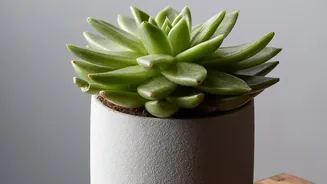
Some plants are naturally better equipped to handle windy conditions. Species with small, narrow, or waxy leaves lose less moisture to the drying effect of the wind. Think of plants native to coastal or exposed environments. Rosemary is a champion of windy balconies, with tough, woody stems and needle-like leaves. Other excellent choices include ornamental grasses, lavender, sage, and thyme, all of which are flexible and resilient. For flowering options, consider compact varieties of marigolds, zinnias, or geraniums, which have sturdy, short stems and a lower profile. Succulents like sedum and agave are also fantastic choices, as their structure is built to withstand harsh conditions.
Practice Smart Maintenance
Proper plant care can make a big difference in wind resistance. Wind rapidly dries out soil, so you will need to check your pots for moisture more frequently than you would in a sheltered garden. Regular pruning is also essential. By trimming your plants and removing spent flowers, you reduce their overall surface area, making them less of a 'sail' for the wind to catch. Keeping plants compact and healthy makes them less susceptible to snapping. If a stem does get bent or damaged, you can sometimes splint it with a bamboo stake and tape to help it heal and recover its strength.