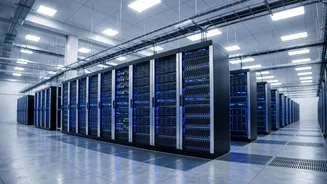





India is on the verge of a data centre 'supercycle', with capacity projected to grow fivefold by 2030. This massive expansion, fueled by AI and digital growth, promises to attract over ₹3 lakh crore in investments.
The Engines of Digital Expansion
The primary driver behind this explosive
growth is the surging demand for computing power. The rise of generative artificial intelligence (GenAI), widespread enterprise digitalisation, and ever-increasing data consumption from a connected population are creating a perfect storm. As companies across India adopt cloud computing and AI workloads become more complex, the need for robust, scalable data centres—the physical brains of the digital world—has become non-negotiable. This demand is so strong that nearly half of the upcoming capacity is already committed under long-term contracts, significantly reducing investment risks for developers. These upfront agreements, often with global 'hyperscalers' or large cloud service providers, provide clear revenue visibility and de-risk projects from the outset.
From Megawatts to Trillions
The scale of this transformation is staggering. According to Crisil Ratings, India's current installed data centre capacity is set to jump from around 1.5 GW to approximately 7.5 GW by March 2030. This quintupling of capacity will require an infusion of more than ₹3 lakh crore (approximately $36 billion) over the next four fiscal years alone. India holds a significant structural advantage in this global race. Development costs—including land, construction, and labour—are roughly 20% lower than in competing Asia-Pacific markets. When combined with more competitive power tariffs, this translates into rental rates that are 30-35% lower than in peer markets, making India a highly attractive destination for global tech giants.
The Infrastructure Bottleneck
Despite the booming demand and cost advantages, the path to 7.5 GW is fraught with challenges. The headline's warning about 'critical infrastructure timelines' points to the single biggest hurdle: power. Data centres are incredibly power-intensive, and their continuous, high-quality energy needs can strain local grids. Around three-fourths of the upcoming 6 GW of capacity is expected to be concentrated in just three cities: Visakhapatnam, Mumbai, and Hyderabad. Crisil estimates that by 2030, the power demand from data centres in these cities could equate to 80%, 60%, and 20% of their current peak electricity demand, respectively. This makes timely grid connectivity and major upgrades to transmission infrastructure absolutely critical to avoid project delays and cost overruns. Beyond power, developers also face challenges in securing suitable land and ensuring access to water for cooling systems, another critical component of data centre operations.
A New Digital Foundation with New Risks
Successfully navigating these challenges will be essential for cementing India's status as a global technology hub. The expansion is expected to be heavily reliant on hyperscale tenants like Google and Microsoft, whose leased capacity could account for 75-80% of the total by 2030. While their longterm contracts (now extending to 15–20 years) provide stability, this heavy dependence also introduces customer concentration risk. As more capacity comes online, the immense bargaining power of these few large clients could eventually put pressure on rental prices and project returns. Therefore, the longterm success of this 'supercycle' will depend not just on building new facilities, but on disciplined project execution, securing reliable power, and managing the evolving relationship with the global tech giants that are underwriting this digital boom.