






Understanding the Monsoon Slump
Ever wonder why you feel more tired during the rainy season? It's not just your imagination. The combination of high humidity, reduced sunlight, and lower air pressure can genuinely affect your body. High humidity makes your body work harder to cool down,
draining energy. Less sunlight can disrupt your body's internal clock and lower the production of serotonin, the 'feel-good' hormone, making you feel lazy and de-motivated. Furthermore, our metabolism tends to slow down during this season, making heavy, fried foods—often craved in rainy weather—harder to digest and contributing to feelings of lethargy. This combination creates the perfect storm for that all-too-familiar monsoon fatigue.
The Power of Sprouted Moong
In the quest for an energy-boosting, monsoon-friendly diet, sprouted moong (green gram) emerges as a nutritional hero. Ayurveda recommends light, easily digestible foods during the monsoon to support a sluggish digestive system, and moong fits the bill perfectly. The process of sprouting transforms the humble moong dal into a powerhouse of nutrients. Sprouting significantly increases the content of vitamins, especially Vitamin C, and makes minerals like iron and magnesium more available for your body to absorb. It also boosts the presence of living enzymes, which aid digestion and reduce issues like bloating that can be common with other legumes. Being low in calories but high in fibre and protein, sprouted moong keeps you feeling full and energised without weighing you down.
Your Ultimate Energy-Boosting Salad Recipe
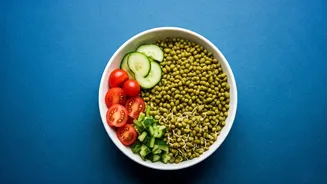
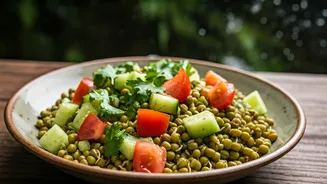
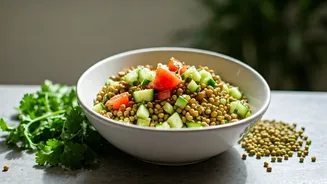
Creating your own sprouted moong salad is incredibly simple. For the base, you will need about 1.5 to 2 cups of sprouted moong. While you can eat them raw, Ayurveda suggests lightly steaming or parboiling them for 5-6 minutes during monsoon to make them even easier on the gut. Once your sprouts are ready and drained, combine them in a large bowl with a colourful mix of chopped vegetables. Excellent additions include about a cup of shredded carrots, a cup of diced cucumber, half a cup of chopped tomatoes, and a quarter cup of finely chopped onions. For a bit of spice, add a finely chopped green chilli. The dressing is key: mix the juice of half a lime, half a teaspoon of chaat masala, and salt and pepper to taste. Toss everything together until well combined.
Customize Your Creation
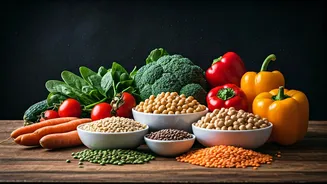
The beauty of this salad bowl lies in its versatility. You can easily adapt it to your taste and what you have in your kitchen. For an extra crunch and healthy fats, add a quarter cup of roasted peanuts. Freshly chopped coriander leaves will add a vibrant, herby flavour. If you're looking for more variety in your vegetables, consider adding chopped bell peppers or grated beetroot. To make the salad a more substantial meal, you can add cubes of boiled potato or sweet potato. For a protein boost, mix in some paneer cubes. Don't be afraid to experiment with the dressing either; a teaspoon of Indian green chutney can offer a different flavour profile. The goal is to create a bowl that you find both nourishing and exciting to eat.