





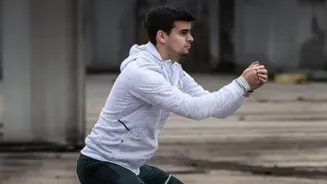

Squats and lunges are foundational for building strong legs, but it's easy to feel wobbly. The secret to unlocking their power isn't just strength, but stability. Here's how to fix your form and master your balance for a better workout.
Why Balance is Your Unsung Hero
When you perform
a squat or a lunge, your body is doing more than just moving up and down. It's constantly making tiny adjustments to keep you from tipping over. This is the work of your core, hips, and even the small muscles in your feet and ankles. A stable base is essential for building strength effectively. Without good balance, your body compensates, often by recruiting the wrong muscles or putting strain on joints, which increases the risk of injury and reduces the effectiveness of the exercise. By focusing on balance, you ensure that the target muscles—your quadriceps, hamstrings, and glutes—are doing the heavy lifting, leading to better results and safer workouts.
Mastering the Squat for Peak Stability
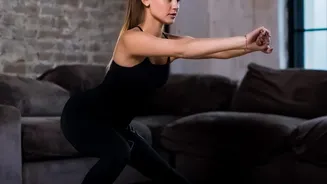
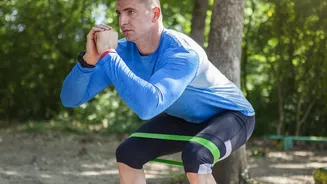
The squat is a fundamental human movement, but small errors can throw you off balance. To perform a stable squat, start with your feet slightly wider than shoulder-width, with your toes pointing slightly outward. Before you move, engage your core by bracing your abdominal muscles. Initiate the movement by pushing your hips back as if you're about to sit in a chair, then bend your knees. Common mistakes include letting your knees cave inward or lifting your heels off the ground. To fix this, consciously push your knees out and keep your weight distributed through your entire foot. Keeping your chest up and your back straight is crucial; looking at a fixed point in front of you can help maintain this posture and your balance.
Conquering the Lunge Wobble
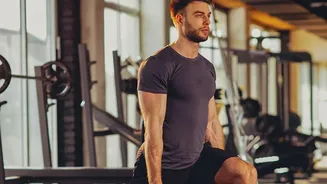
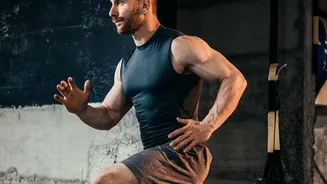
Lunges are uniquely challenging because they are a single-leg dominant exercise, demanding more from your stability. For a forward lunge, step forward and lower your hips until both knees are bent at approximately a 90-degree angle. Your front knee should be aligned over your ankle, not drifting past your toes, and your back knee should hover just above the floor. A common mistake is taking a step that is too narrow, as if on a tightrope. Instead, maintain a hip-width distance between your feet as you step forward or backward to create a wider, more stable base. If you're still wobbly, try reverse lunges first; stepping backward is often easier to control than stepping forward. Don't be afraid to hold onto a wall or chair for support initially.
The Core: Your Body's Anchor
Your core is much more than just your abs; it's a complex group of muscles around your trunk, including your back and hips, that provides stability for your entire body. A strong, engaged core acts like a natural weight belt, stabilizing your spine and pelvis during squats and lunges. This prevents your torso from pitching forward and helps transfer power efficiently between your upper and lower body. To properly engage your core, think about tightening the muscles around your midsection as if you're about to be punched in the stomach. This bracing should be maintained throughout the entire movement, from the moment you begin to lower yourself until you return to the starting position.
Simple Drills to Boost Your Balance
If you consistently struggle with balance, incorporating specific drills into your routine can make a significant difference. Start with a simple single--leg stand. Try holding it for 30 seconds on each side, and once that feels easy, try it with your eyes closed. Another effective exercise is the 'bird--dog', where you start on all fours and extend the opposite arm and leg while keeping your hips and shoulders level with the floor. You can also practice single--leg Romanian deadlifts (even with just your bodyweight) to challenge your stability while strengthening your hamstrings and glutes. Performing these drills a few times a week will train your nervous system and muscles to work together more effectively, leading to noticeable improvements in your squats and lunges.