




The Problem with Twinkling Stars
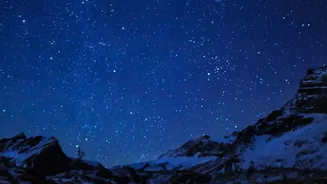
The 'twinkle' that makes stars beautiful to the naked eye is a phenomenon called atmospheric scintillation. It is not the star itself flickering, but the effect of its light travelling through Earth’s turbulent atmosphere. Pockets of air at different
temperatures and densities act like tiny, shifting lenses, bending the starlight in random directions before it reaches our eyes or a telescope. This constant distortion, often called 'bad seeing' by astronomers, blurs fine details, making it difficult to capture sharp images of distant galaxies, nebulae, or planets. For scientists trying to study faint or faraway objects, this shimmer is a significant obstacle, turning a potentially sharp point of light into a blurry blob.
Spiti's Unique Geographical Advantage
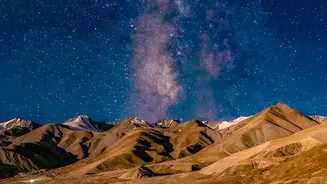
Nestled in the trans-Himalayan region of Himachal Pradesh, the Spiti Valley is a cold desert mountain valley. Its defining characteristics are what make it a prime location for astronomy: high altitude, remoteness, and extreme dryness. Situated at altitudes often exceeding 4,000 metres, observatories and viewing sites in Spiti are physically above a significant portion of the Earth’s atmosphere. This height means there's simply less air for starlight to travel through. Furthermore, its remote location, far from major cities, ensures minimal light pollution, resulting in Bortle 1 class skies—the darkest possible rating.
Why Dry Air Means Clearer Skies
The most critical factor in reducing atmospheric shimmer is the lack of moisture. Water vapour is a primary culprit in atmospheric turbulence and absorption. Humid air is less dense than dry air, and these differences in density cause light to refract, or bend. Water molecules also absorb and scatter light, particularly in the infrared spectrum, which is crucial for many modern astronomical studies. Spiti, being in a rain-shadow area, has exceptionally low humidity. This bone-dry air is far more stable than moist air. With very little water vapour to cause turbulence or absorb light, the atmosphere becomes remarkably transparent, allowing starlight to pass through with minimal disturbance.
India's Window to the Universe
This natural advantage has not gone unnoticed. The nearby region of Hanle in Ladakh, which shares Spiti's cold-desert climate, is home to the Indian Astronomical Observatory (IAO), one of the world's highest observatories. Research confirms that the Hanle site is as dry as the famed Atacama Desert in Chile, with over 270 clear nights a year, making it a globally significant site for optical, infrared, and sub-millimetre astronomy. The stability and clarity of the atmosphere here allow Indian scientists to conduct cutting-edge research, from studying distant galaxies to monitoring active celestial events. In September 2022, the area around the observatory was officially designated as India's first Dark Sky Reserve to protect its pristine conditions.
Astro-Tourism and the Future
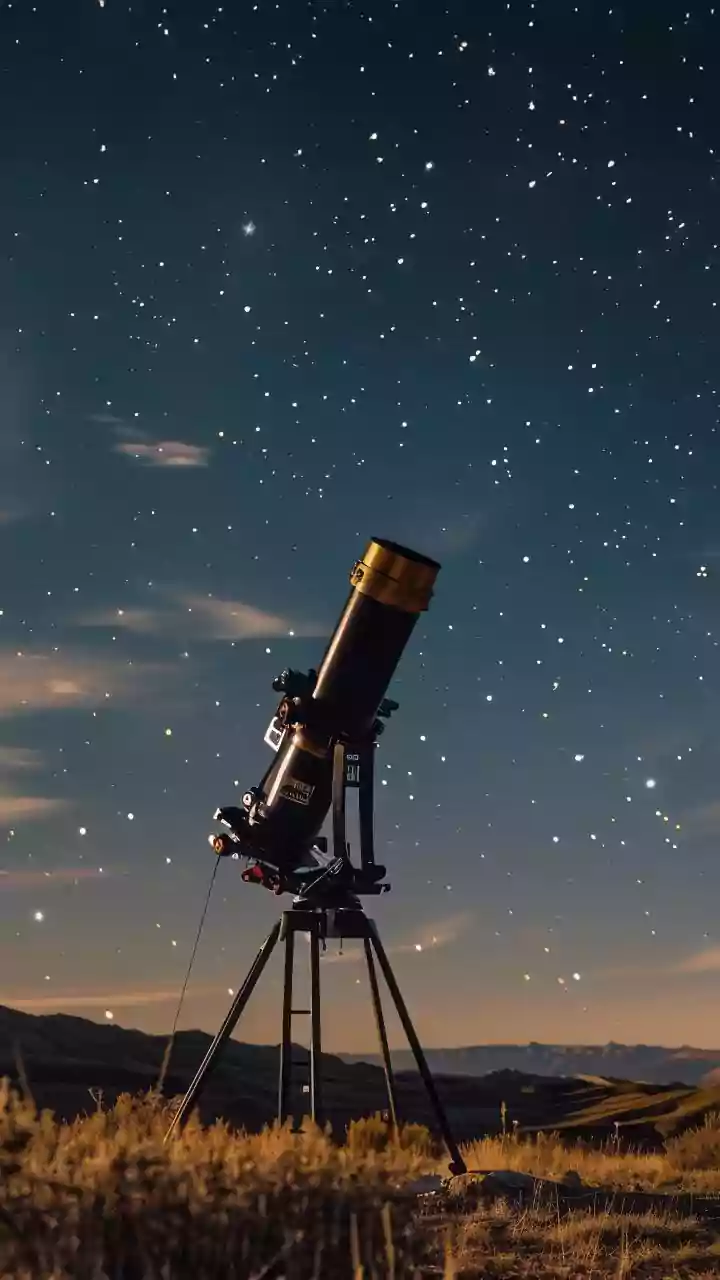
The government and local communities in Spiti are now leveraging these world-class skies to promote astro-tourism. Initiatives have been launched to provide locals with high-end telescopes and training to guide tourists in stargazing, creating new entrepreneurial opportunities. Public observatories are also being established to give travellers a chance to experience the cosmos in a way that's impossible from a city. As India continues to expand its role in space science, these high-altitude deserts are more than just stunning landscapes; they are invaluable national assets, providing a crystal-clear window to the universe and inspiring a new generation of scientists and stargazers.