


The Science of Staying Cool
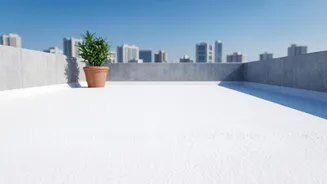
So, what exactly are these 'cool' paints? Think of it like choosing your clothes for a sunny day. A dark shirt absorbs sunlight and makes you feel hotter, while a white shirt reflects it and keeps you cooler. Cool roof paints work on the same principle
but are far more advanced than regular paint. They are specially formulated with materials that have high 'solar reflectance' and high 'thermal emittance'. Solar reflectance is the ability to bounce sunlight back into the atmosphere, with some coatings reflecting up to 90% of solar radiation. Thermal emittance refers to the paint's ability to efficiently release any heat it has absorbed. Together, these properties prevent heat from building up on the roof's surface and transferring into your home. During peak summer, an uncoated concrete roof can reach temperatures of 65-70°C, but a cool coating can lower that surface temperature by 20-25°C.
The Five-Degree Difference: Myth or Reality?
The headline claim of cutting indoor heat by five degrees Celsius is not just an exaggeration; multiple studies and real-world applications back it up. In Indian weather conditions, a quality cool roof coating can reduce indoor temperatures by a noticeable 3-5°C. Some reports even indicate a reduction of up to 5-7°C is possible, especially for top-floor apartments or independent houses with direct sun exposure. A study in Hyderabad found that implementing cool roofs led to indoor temperature reductions of up to 5°C. Similarly, research has demonstrated indoor air temperature reductions between 1.5°C and 4.3°C in rural Indian buildings. The exact temperature drop depends on factors like your home's insulation, the quality of the paint, local climate, and the type of roof. However, the consistent evidence shows a significant and comfortable difference.
More Than Just Comfort
The advantages of applying a cool roof paint extend beyond just feeling cooler. A major benefit is the reduction in energy consumption. By lowering indoor temperatures, the load on air conditioners is significantly reduced, which can lead to electricity savings of 15-20%. Some estimates suggest AC costs can be cut by up to 19.2%. This not only saves you money but also contributes to a more stable power grid, especially during peak summer demand. Furthermore, these coatings protect the roof itself. By reducing the extreme temperature fluctuations that cause materials to expand and contract, they minimize thermal stress, which can prevent cracks and extend the lifespan of your roof. On a larger scale, widespread adoption of cool roofs helps combat the 'urban heat island' effect, where cities are significantly warmer than surrounding rural areas, making our urban spaces more liveable.
Safety, Cost, and Practicality in India
When it comes to safety, modern cool roof paints are designed to be non-toxic and eco-friendly, with low levels of volatile organic compounds (VOCs). Many are water-based acrylic or elastomeric paints, making them safe for residential application and for the environment. Cost-wise, these paints are an accessible investment. In India, a 20-litre pack can cost between ₹1,500 and ₹3,500, depending on the brand and technology. This amount typically covers around 1,800 to 2,200 square feet with the recommended two coats. Given the potential savings on electricity bills, the payback period can be as short as two to three years. The durability is also a key feature, with many high-quality coatings designed to last for several years, resisting dust, rain, and UV damage common in the Indian climate. Many brands popular in India, such as Asian Paints, Dr. Fixit, and Berger, offer cool roof solutions.
Making the Right Choice
When selecting a cool roof paint, don't just look at the price. The most important metric to check is the Solar Reflectance Index (SRI). SRI is a score that combines both solar reflectance and thermal emittance into a single value, indicating how hot a surface will get in the sun. A standard black surface has an SRI of 0, while standard white is 100. For the Indian climate, you should look for a paint with an SRI of at least 75, though many high-performance coatings have an SRI above 100. While white is the most effective colour for reflecting heat, advancements in pigment technology mean that even some darker shades are now available with high SRI values, offering more aesthetic choice without sacrificing performance.