


The 'Goldilocks' Position
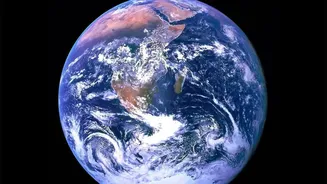
The most fundamental requirement for a life-bearing planet, as we understand it, is its location. Earth orbits the Sun within a region known as the 'habitable zone,' sometimes called the 'Goldilocks Zone.' This is the not-too-hot, not-too-cold orbital
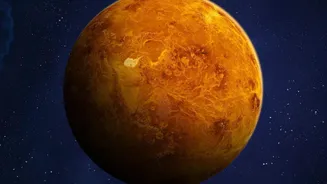
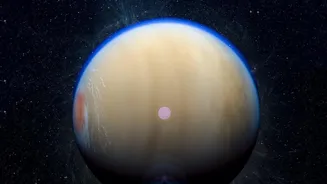
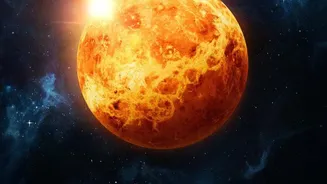
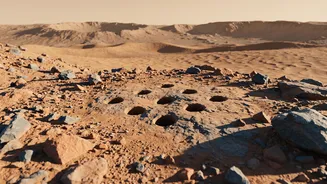
band where temperatures are just right for liquid water to exist on a planet's surface. Too close to the star, and water boils away into space, as likely happened on Venus. Too far, and it freezes solid, like on Mars. Our planet's orbit within this specific zone is the first and most critical checkmark in its long list of life-sustaining credentials.
The Miracle of Liquid Water
While the habitable zone allows for liquid water, having it in abundance is another matter. Water is often called the 'universal solvent' because its unique chemical properties allow it to dissolve other substances, transport nutrients, and facilitate the chemical reactions that are essential for life. Nearly every life process on our planet, from cellular respiration to waste removal, depends on water. It's made from hydrogen and oxygen, two of the most abundant elements in the universe, which is promising for the search elsewhere. But having it as a stable liquid covering over 70% of the surface makes Earth a truly special case.
A Protective, Breathable Atmosphere
A planet can have water, but without a suitable atmosphere, it won't last long. Earth's atmosphere is a multi-layered shield that performs several critical jobs. It provides the oxygen we breathe and maintains enough surface pressure to prevent liquid water from instantly boiling away. Furthermore, it acts as an insulating blanket, trapping heat through the greenhouse effect to keep global temperatures stable and preventing wild swings between day and night. This blanket also contains the ozone layer, which filters out the most harmful forms of ultraviolet (UV) radiation from the sun, protecting life on the surface from cellular damage.
An Invisible Force Field
Another crucial, yet invisible, shield is Earth's magnetic field. Generated by the movement of molten iron in our planet's core, this magnetic field extends far into space, forming the magnetosphere. Its primary job is to deflect the solar wind—a constant stream of charged particles from the Sun that would otherwise strip away our atmosphere over time. Scientists believe this is exactly what happened to Mars, which once had a thicker atmosphere and liquid water but lost them after its magnetic field weakened and disappeared. Earth’s robust magnetic field has been a key factor in its ability to remain habitable for billions of years.
A Geologically Active Planet
It might seem counterintuitive, but a geologically active planet is a healthy planet. Processes like plate tectonics and volcanism are vital for long-term habitability. Plate tectonics helps regulate Earth's climate over geological timescales by cycling carbon between the atmosphere, oceans, and the planet's interior. This carbon cycle acts as a global thermostat, preventing the planet from getting too hot or too cold. Volcanic activity, driven by internal heat, releases gases that replenish the atmosphere and delivers essential nutrients to the surface. While some research suggests life may have emerged before plate tectonics began, it is considered crucial for sustaining life in the long run.