



What Exactly Is a 'Roasted World'?
Imagine a planet where it rains molten iron or one hotter than most stars in the universe. These aren't concepts from science fiction; they're real exoplanets that astronomers are studying today. The term 'roasted worlds' is an informal catch-all for a category
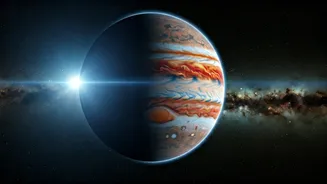
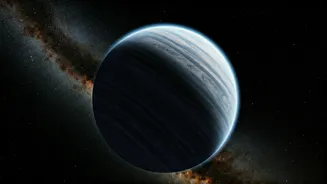
of extreme planets, most often 'hot Jupiters' or 'ultra-hot Jupiters'. These are gas giants, similar to or even larger than our own Jupiter, that orbit perilously close to their parent stars. With orbital periods of just a few days, they are tidally locked, meaning one side permanently faces the star's blistering heat while the other is cast in perpetual darkness. The dayside temperatures can soar to thousands of degrees Celsius, hot enough to vaporize rock and metals. On planets like WASP-76b, this leads to an unbelievable weather cycle: vaporized iron is blown by powerful winds to the cooler night side, where it condenses and falls as metallic rain.
The Science Behind the Spectacle
While the idea of an iron-raining planet is a great conversation starter, these worlds are more than just cosmic curiosities. They are invaluable natural laboratories for understanding planetary formation and evolution under extreme conditions. Because hot Jupiters are large and orbit close to their stars, they are easier for astronomers to detect and study. The two primary detection methods, the 'transit method' (watching for a star's light to dim as a planet passes in front) and the 'wobble method' (observing a star's movement from the gravitational pull of a planet), are most effective with these massive, fast-orbiting worlds. Studying their atmospheres, which can look more like a star's than a planet's, helps scientists test and refine models of atmospheric physics. For example, understanding why water molecules appear to break apart on their scorching daysides gives us clues about chemistry in environments far different from our own.
The Challenge of Communicating the Cosmos
For scientific institutions like NASA, communicating the value of their work is a critical business function. Public engagement helps secure funding, inspires the next generation of scientists, and builds trust. However, much of modern astronomy is deeply complex. Explaining concepts like stellar spectroscopy, atmospheric composition analysis, or the nuances of the radial velocity method can be a tough sell for a general audience. The data often arrives not as a stunning picture, but as graphs and light curves that require expert interpretation. This creates a communication gap. While the discoveries are profound, the process can feel abstract and inaccessible, making it difficult for the public to connect with the work on an intuitive level.
A Story That Sells Itself
This is where roasted worlds excel. They are the perfect 'product' for science communicators. Their extreme nature provides a simple, powerful narrative that cuts through the complexity. You don't need a PhD in astrophysics to be captivated by the idea of a planet darker than coal (TrES-2b) or one so fluffy it's been compared to cotton candy (WASP-193b). These tangible, almost mythological descriptions serve as a hook. They leverage relatable concepts—heat, darkness, rain—and push them to unbelievable extremes. It's a strategy that leans on what communication experts advise: find the big picture, use analogies, and connect to human experience. These planets have a story that practically tells itself, making the job of sharing the science behind them significantly easier.
From Data Points to Viral Content
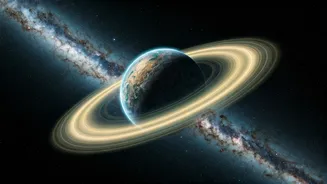
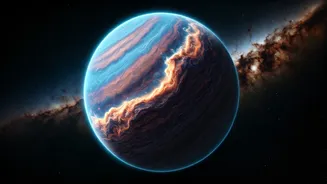
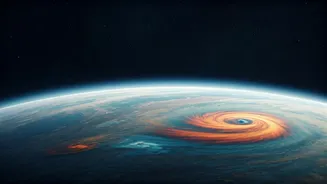
The journey from a faint dip in a star's light curve to a viral social media post is a masterclass in strategic communication. When a discovery like a 'roasted world' is made, science communication teams at institutions like NASA get to work. They collaborate with artists to transform raw data into breathtaking conceptual illustrations—a planet-sized diamond, a world with colossal rings, or a shimmering blue globe where it rains glass. These visuals are the currency of the digital age. They are instantly shareable, emotionally resonant, and can convey a core idea far quicker than a press release. Paired with a catchy headline, these discoveries become global news, demonstrating a clear return on investment for the complex science that underpins them. By 'marketing' these extreme worlds, scientists are not just sharing facts; they are building a brand for space exploration itself—one that is exciting, wondrous, and accessible to everyone.