
A Storm from the Sun
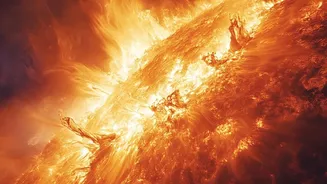
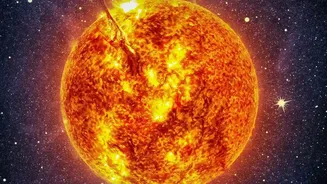
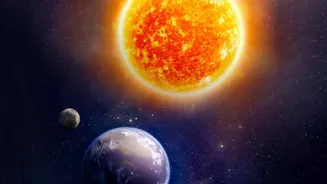
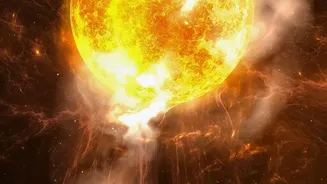
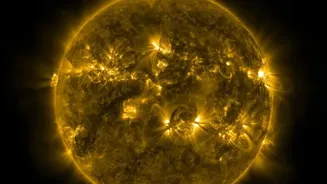
A solar storm is a powerful eruption from the Sun that can send a torrent of energy and charged particles hurtling toward Earth. These events come in two main forms: solar flares, which are intense bursts of radiation, and Coronal Mass Ejections (CMEs),
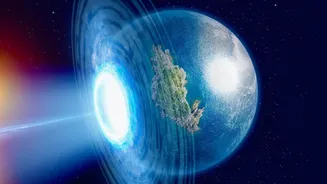
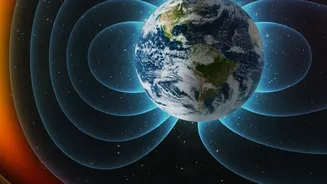
which are giant clouds of solar plasma and magnetic fields. When a CME is aimed at our planet, it can interact with Earth's magnetic field, triggering a geomagnetic storm that has tangible effects on our technology-dependent world. While our atmosphere protects us from the most harmful radiation, the electrical and magnetic effects of these storms can wreak havoc on the ground and in orbit.
The Threat to Our Power Grid
One of the most significant risks of a severe solar storm is to our electrical grids. Geomagnetic storms can create powerful, uncontrolled currents in the Earth's surface, known as geomagnetically induced currents (GICs). These currents can flow into long conductors like high-voltage power lines, overloading transformers and other critical components. An overloaded transformer can overheat, sustain damage, or trigger protective shutdowns, leading to widespread and potentially long-lasting power outages. A historic example is the March 1989 storm that knocked out power across the entire province of Quebec, Canada, for nine hours, demonstrating the real-world vulnerability of our electrical infrastructure.
Losing Our Way and Our Connection
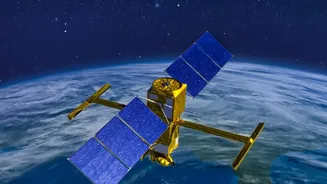
Our reliance on precise navigation and communication makes us particularly vulnerable. Solar storms can disrupt the signals from Global Positioning System (GPS) satellites. The radiation can interfere with satellite electronics, and the atmospheric disturbances can degrade the accuracy of GPS signals or cause a complete loss of signal. This affects more than just the maps on our phones; aviation, shipping, precision agriculture, and even financial transactions that depend on GPS for timing can all be compromised. Furthermore, solar flares can cause radio blackouts by altering the Earth's ionosphere, disrupting high-frequency radio communications used by airlines and emergency services.
An 'Internet Apocalypse' Scenario
In a worst-case scenario, a solar storm on the scale of the 1859 Carrington Event could threaten the very backbone of our digital world: the internet. That historic storm caused telegraph systems to fail, shoot sparks, and even catch fire. Today, a similar event could have a catastrophic impact on the thousands of kilometres of undersea cables that carry global internet traffic. While the fibre-optic cables themselves are immune to geomagnetic currents, the signal-boosting repeaters placed every 50 to 150 kilometres along these cables are not. A powerful storm could damage these repeaters, potentially leading to a widespread, long-term internet outage that could take months or even years to fully repair.
India's Eyes on the Sky
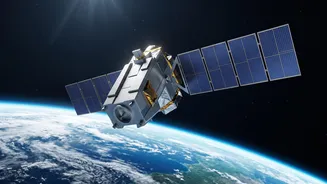
Recognising these threats, nations around the world are investing in solar observation, and India is a key player. The Indian Space Research Organisation (ISRO) launched the Aditya-L1 mission, the country's first space-based observatory dedicated to studying the Sun. Positioned at a unique vantage point 1.5 million kilometres from Earth, Aditya-L1 has an uninterrupted view of the Sun. Its seven instruments constantly monitor the solar atmosphere, tracking phenomena like CMEs and flares. This provides crucial data not just for scientific understanding, but for developing early warning systems. This mission enhances India's capabilities and contributes to a global effort to predict and mitigate the impacts of space weather.