








The Power of a Cheaper Ticket to Orbit
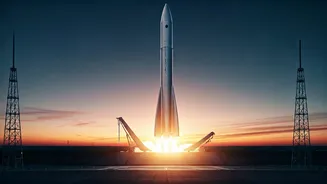
The single most important factor driving investor interest is the dramatic reduction in launch costs, largely thanks to reusable rocket technology pioneered by companies like SpaceX. In the past, every launch required an expensive, single-use rocket.
Today, reusing the most expensive components has slashed the cost to reach low-Earth orbit. This economic shift has turned space access from a rare, monumental expense into a repeatable, more affordable operating model. This has opened the door for thousands of new companies and business models that were previously financially unviable, making the entire sector more attractive to private equity and venture capital.
Satellites: The Backbone of the New Space Economy
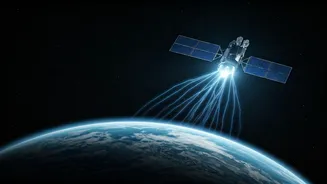
Much of the commercial space boom is built on the explosive growth of satellite-based services. The demand for global connectivity, from broadband internet in remote areas to Internet of Things (IoT) applications, is immense. Companies are deploying vast constellations of satellites, creating recurring, subscription-style revenue streams that are highly attractive to investors. Mega-constellations like SpaceX's Starlink, which serves millions of subscribers, and Amazon's Project Kuiper demonstrate a clear and scalable business model. This segment, which includes manufacturing, launch, and ground services, represents the most mature and commercially proven part of the space economy.
Data from Above, Value on Earth
Beyond connectivity, the data that satellites collect is becoming an incredibly valuable commodity. This field, known as Earth observation (EO), provides actionable insights for a vast range of industries on Earth. For example, agricultural companies use satellite imagery to monitor crop health, insurance firms assess damage after natural disasters, and financial institutions track economic activity by observing port traffic or construction sites. The ability to turn raw satellite data into monetizable, AI-driven analytics for climate monitoring, supply chain management, and regulatory compliance makes EO one of the fastest-growing and most versatile segments of the industry.
Governments as Anchor Customers
While the industry is increasingly commercial, governments remain a primary source of funding and a crucial customer base. National security and defense have become major drivers of investment, with agencies like the U.S. Space Force and others spending billions on commercial services for satellite communications, surveillance, and launch capabilities. These long-term, stable contracts provide a reliable revenue floor for many private space companies, reducing risk for investors. This public-private partnership model allows government agencies to leverage the speed and innovation of the private sector while providing the capital that helps these companies scale.
The Next Frontiers: In-Space Services and Tourism
Looking ahead, investors are also placing bets on future, high-growth markets. This includes in-orbit services like satellite refueling, maintenance, and debris removal, which are essential for managing the growing number of assets in space. Other emerging opportunities include in-space manufacturing, where the microgravity environment could be used to produce high-value materials like advanced pharmaceuticals or fiber optics. And while still in its early days, space tourism continues to capture public imagination and attract capital, representing a potential long-term growth area as costs continue to fall.