



The Celestial Challenge
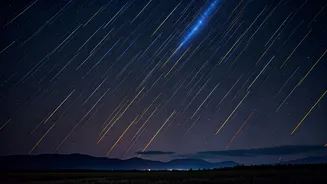
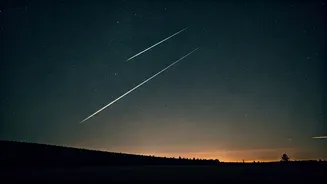
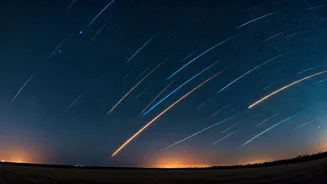
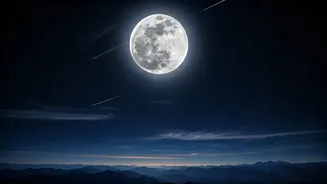
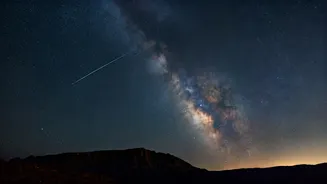
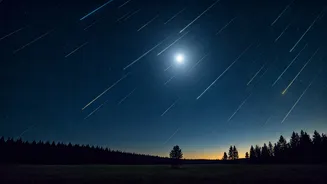
This year, the Southern Delta Aquariid and Alpha Capricornid meteor showers are set to peak around the nights of July 30th and 31st. Ordinarily, this would be a perfect time to lay back and watch the spectacle. However, the full moon on July 29 means
the sky will be saturated with light. This natural light pollution makes it incredibly difficult to spot the fainter streaks of light from burning meteoroids. The Southern Delta Aquariids, in particular, are known for being faint, meaning many of them will be rendered invisible. It’s a frustrating scenario for any stargazer, but it doesn’t mean the night is a total loss. With the right approach, you can still witness some cosmic magic.
Seek True Darkness
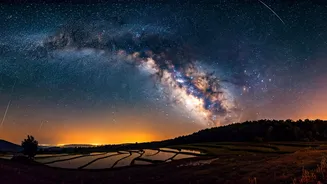
Your first and most important mission is to escape artificial light. While this is standard advice for any stargazing, it becomes absolutely critical during a full moon. The combined glow from city lights and the moon will obliterate all but the very brightest objects. Find a location as far from urban centres as possible. Think remote parks, rural fields, or designated dark-sky preserves. Even a 30-minute drive out of town can make a significant difference. Your goal is to give your eyes the best possible chance by creating a canvas that is as dark as you can find. A wide, open view of the sky, free from the direct glare of streetlights or buildings, is non-negotiable.
Use the Moon's Shadow
You can’t turn off the moon, but you can hide from it. One of the most effective strategies is to use your environment to create a “moon shadow.” Position yourself so that a large object—like a barn, a dense patch of trees, or a hillside—blocks the moon from your direct line of sight. This simple trick shields your eyes from its direct glare, helping to preserve your night vision. You’ll still be under a bright sky, but avoiding the direct source of light allows your pupils to dilate more fully. Lie on a reclining chair or blanket with your back to the moon's position for the most comfortable and effective viewing experience.
Patience and Eye Adaptation
Your eyes are the most important tool you have, but they need time to prepare. It takes at least 20 to 30 minutes for your eyes to fully adapt to the darkness and achieve their peak sensitivity. During this time, you must avoid all sources of white light. That means putting your phone away. The bright screen will instantly reset your night vision, forcing you to start the adaptation process all over again. If you need a light, use a red-light torch, as it has a much gentler effect on your eyes. Patience is key; meteors often come in spurts with lulls in between. Don't give up after just a few minutes.
Hunt for the Fireballs
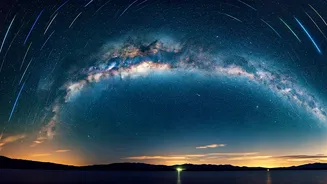
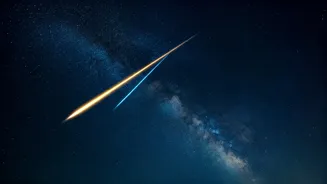
While the faint Delta Aquariid meteors will be hard to spot, the Alpha Capricornids have a reputation for producing spectacular, bright fireballs. These are exceptionally vivid meteors that can easily outshine the moonlight. Instead of trying to count dozens of faint streaks, adjust your expectations and focus on spotting these brilliant outliers. A single, dramatic fireball streaking across the sky can be more memorable than a dozen lesser meteors. The best viewing time is typically in the pre-dawn hours, when the shower's radiant point is higher in the sky and the moon may be sinking closer to the horizon.