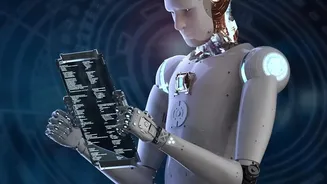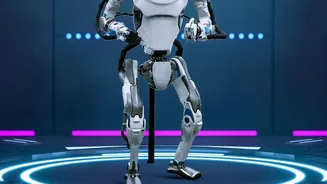


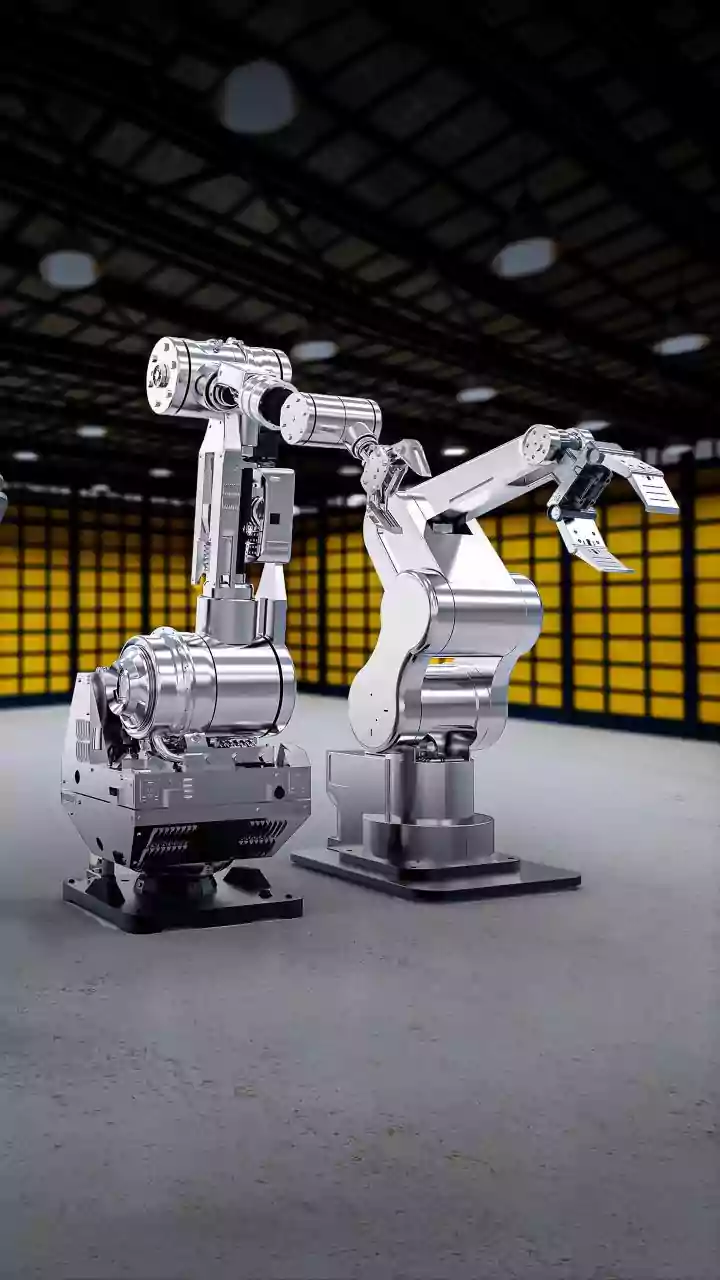


Humanoid robots have long been a staple of science fiction, but now they are clocking in at factories and warehouses. Automakers and logistics giants are running pilot programs to answer a crucial question: are they worth the price tag?
From Sci-Fi to the Factory Floor
The era of humanoid
robots as a purely conceptual technology is over. In 2026, companies like Figure AI, Agility Robotics, and Tesla are moving beyond impressive demos and deploying their machines into real-world industrial settings. Major corporations are taking notice and launching trial runs. Automaker BMW, for example, has an ongoing partnership with Figure AI, testing its humanoids in its US manufacturing plants in Spartanburg, South Carolina, and Leipzig, Germany. Similarly, logistics giants like Amazon are testing Agility Robotics' 'Digit' model in their fulfilment centres to handle repetitive tasks like moving empty storage totes. These pilot programs are designed to gather critical data on performance, safety, and, most importantly, the economic viability of integrating these machines alongside a human workforce.
The Multi-Crore Question: Cost vs. Benefit
The central hurdle for widespread adoption is the cost. While prices are falling dramatically, industrial-grade humanoids are still a significant capital expense. Early commercial models from companies like Agility Robotics were estimated to cost between $100,000 and $250,000 per unit. However, a price war is emerging. Tesla aims to produce its 'Optimus' robot for under $30,000 at scale, and some Chinese manufacturers like Unitree are already offering models for as low as $16,000. The return on investment (ROI) calculation is complex. Companies weigh the upfront hardware cost and additional expenses for integration, software, and maintenance against potential long-term savings. The primary benefit is offsetting human labour costs, which can include wages, benefits, and expenses related to workplace injuries. Some analyses suggest that in a US manufacturing context, a robot running two shifts could pay for itself in 12 to 18 months. As prices continue to fall, that payback period could shrink to under six months, making the financial argument increasingly compelling.
Early Trials and Real-World Tasks
So, what are these robots actually doing? For now, the tasks are specific and repetitive. In BMW's Spartanburg plant, a Figure robot was tested for months in the body shop, moving sheet metal parts for the welding process. The next phase of the trial involves using the newer Figure 03 model for more complex logistics tasks, such as sorting parts onto trolleys. At Amazon, the Digit robot's initial job is tote recycling, a physically repetitive process. The key advantage of a humanoid form is flexibility; because the world is built for humans, these robots can potentially perform tasks in existing spaces without requiring expensive facility redesigns. However, early results show that performance is still a work in progress. In some cases, the robots operate more slowly than their human counterparts, and they often require supervision, highlighting that these are still early days for the technology.
More Than Just a High Price Tag
The cost of the hardware is only one part of the equation. Businesses must also consider the 'total cost of ownership'. This includes significant investment in software integration to make the robots work with existing factory management systems, safety certifications, and training for human employees who will work alongside them. Reliability and maintenance are other critical factors. A production line can't afford a key worker—human or robot—to be down for long. While some models are now capable of working a full eight-hour shift on a single charge, ensuring near-constant uptime is a major engineering challenge. Furthermore, while the robots' AI 'brains' are advancing rapidly, allowing them to learn tasks through demonstration, they are not yet capable of the dynamic problem solving that human workers perform effortlessly every day.