

A Hostile but Not Uniform Environment
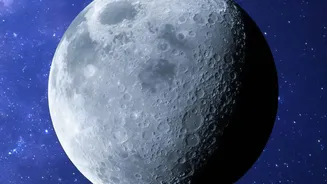
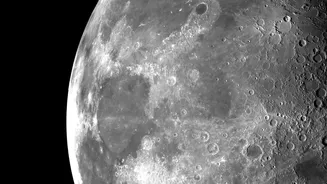
For life as we know it, the Moon is an exceptionally brutal place. With no significant atmosphere, its surface is bombarded by intense, unfiltered ultraviolet (UV) radiation from the Sun. Temperatures swing wildly, from scorching highs of around 127°C
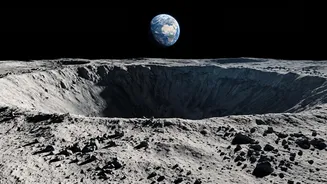
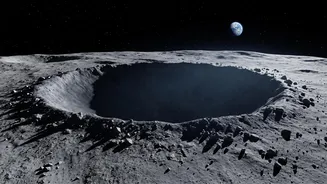
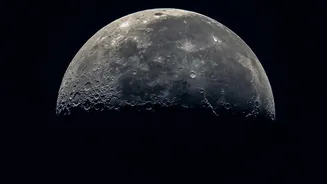
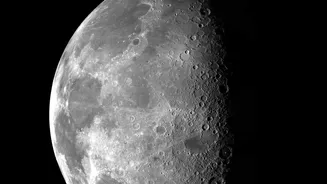
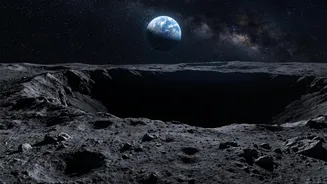
in the sunlight to frigid lows in the darkness. For decades, these conditions led scientists to believe that the lunar surface was completely inhospitable. However, new research is painting a more nuanced picture. A study published in Science Advances highlights that the Moon's surface is not uniformly hostile. The key lies in the topography of the lunar poles. Because the Moon has very little axial tilt, the Sun always hangs low on the horizon at the poles. This creates permanently shadowed regions in the depths of craters, which are shielded from direct sunlight and its lethal radiation. These areas can remain stable, ultra-cold, and dark, creating unique microclimates.
Survival, Not Growth
This is where the headline's crucial distinction comes in. The NASA-led study makes it clear that none of the microbes tested could grow or reproduce on the Moon. The conditions are far too extreme, lacking essential elements like liquid water and nutrients. Instead, the research found that some hardy microorganisms could enter a dormant state of suspended animation, known as cryptobiosis, to survive. In this state, all metabolic processes pause, allowing the organism to endure the extreme cold and vacuum until conditions potentially become more favourable. The study, which used computer simulations based on data from NASA's Lunar Reconnaissance Orbiter, found that certain microbes could survive for at least 24 hours, and in some optimal shadowed locations, potentially for weeks or even months.
The Toughest Microbes on Earth
So, what kind of life can withstand such an ordeal? The researchers modelled the resilience of five microorganisms commonly found in environments associated with human spaceflight. These included three types of bacteria and two fungal species. Interestingly, the fungi proved more resilient than the bacteria. One species in particular, Aspergillus niger—a common black mould found in damp places on Earth like showers—showed remarkable toughness. It was able to survive even brief exposure to partial sunlight, demonstrating an unexpected resistance to intense UV light. Another tough microbe studied was Deinococcus radiodurans, a bacterium famous for its ability to withstand cold, dehydration, and massive doses of radiation. The survival of these organisms, which are not always considered specialised 'extremophiles', has surprised scientists and underlines how resilient life can be.
Implications for Future Missions
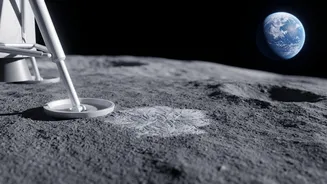
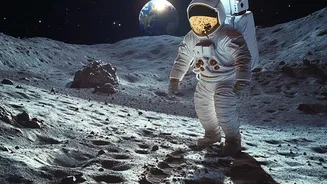
These findings have significant implications for the future of lunar exploration, particularly for the upcoming Artemis missions, which aim to land astronauts near the Moon's South Pole. The fact that human-associated microbes can survive, even temporarily, raises concerns about planetary protection. Planetary protection is the principle of preventing biological contamination of other celestial bodies. Scientists want to study the Moon in its pristine state to understand its geology and search for chemical clues about its history. If astronauts inadvertently introduce Earth microbes, it could become difficult to distinguish between native lunar chemistry and contamination. Even the simple act of leaving a bootprint could create a tiny, shadowed niche where microbes might survive. As a result of these concerns, NASA will need to develop stringent protocols to document and minimise this unavoidable contamination. The moon is now seen as a natural laboratory to test the real-life limits of microbial survival in an environment that cannot be replicated on Earth.