



Why We're Breaking Up with Sit-Ups
The humble sit-up has been a fitness staple for generations, synonymous with building a ‘six-pack’. However, exercise experts and physiotherapists have increasingly cautioned against it. The primary concern is the repetitive spinal flexion—the act of
curling your spine forward. This motion can place significant stress on the lumbar discs. Over time, for some individuals, this can contribute to lower back pain or even injury. Furthermore, sit-ups are often dominated by the hip flexors, a group of muscles at the front of your hips. When your hip flexors do most of the work, your abdominal muscles get less of a workout. Overly tight hip flexors can pull your pelvis forward, creating an anterior tilt that further strains the lower back. The goal isn't to demonise a single exercise, but to recognise that more effective and safer alternatives now exist.
Understanding Your Core's Real Job
To find a better alternative, we first need to understand what the core is truly for. Think of your core not just as the 'abs' you see in the mirror (the rectus abdominis), but as a 360-degree cylinder of muscle that includes your deep abdominals (transverse abdominis), obliques, lower back muscles, and even your glutes and pelvic floor. Its primary job isn't to crunch, but to stabilise your spine. Your core acts as a rigid corset, protecting your back from injury and transferring force efficiently between your upper and lower body. Whether you're lifting a heavy bag of groceries, playing tennis, or simply standing up from a chair, your core is firing to keep your torso stable. Functional core training, therefore, focuses on exercises that challenge this stabilising function, often by introducing an element of instability.
Enter the Sliding Disc Reverse Lunge
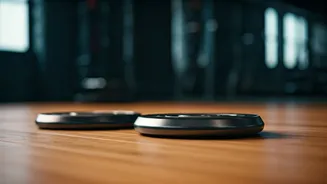
This is where the reverse lunge on a sliding disc shines. At first glance, it looks like a leg exercise—and it is a great one for your glutes and quads. But the magic for your core comes from the instability of the sliding disc. As you slide one leg back, your body must fight to maintain balance and keep your torso upright and stable. This resistance to twisting and bending forces your entire core musculature to engage isometrically—meaning the muscles contract without changing length. You’re teaching your core to do exactly what it’s designed for: providing a solid foundation for movement. Unlike a sit-up, which isolates one muscle group in a non-functional way, this exercise integrates the core into a full-body movement pattern, which is how you use it in everyday life.
How to Perform It Correctly
Proper form is crucial to get the benefits and avoid injury. If you don't have sliding discs, a towel on a smooth floor (like wood or tile) works perfectly. 1. **Starting Position:** Stand with your feet hip-width apart. Place the ball of one foot onto the centre of a sliding disc or towel. 2. **Engage Your Core:** Before you move, brace your core as if you're about to be lightly punched in the stomach. Keep your chest up and your shoulders back and down. 3. **The Slide:** Slowly slide the foot on the disc straight back, bending both knees to lower into a lunge position. Your front knee should be bent at approximately 90 degrees and aligned over your ankle, not your toes. Your back knee will hover just above the floor. 4. **The Return:** Drive through the heel of your front foot and squeeze your glutes. Simultaneously, pull with your back leg, using your hamstring and core to slide the disc back to the starting position. 5. **Repetitions:** Aim for 8-12 smooth, controlled repetitions on one side before switching to the other.
Common Mistakes and Pro Tips
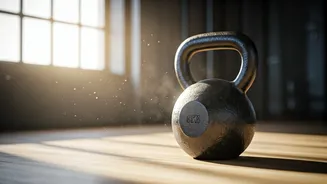
To get the most out of this exercise, watch out for a few common errors. The most frequent is letting the front knee drift past the toes, which puts undue stress on the knee joint. Focus on sitting your hips back as you lunge. Another mistake is rounding your back and leaning your chest forward. Keep your torso upright throughout the movement; this is key for core engagement. **Beginner Tip:** If you're new to this, start without the slider. Master the form of a standard reverse lunge first. Then, introduce the slider slowly. **Pro Tip:** To increase the challenge, hold a dumbbell or kettlebell in the goblet position (held against your chest). This adds load and further challenges your core stability.