





The Details of the Price Hike
Tata Motors announced on August 21 that it will implement a price hike of up to ₹25,000 across its portfolio. This change will come into effect from September 1, 2026, and applies to all passenger vehicles, including popular internal combustion engine
(ICE) models and the brand's growing range of electric vehicles (EVs). The company clarified that this is not a flat increase. Instead, the quantum of the hike will vary depending on the specific model and variant. This means more affordable cars like the Tiago will likely see a smaller price jump in rupee terms compared to high-end SUVs such as the Safari and Harrier.
Why Are Prices Increasing Again?
The primary driver behind this move is the persistent pressure of rising input costs and sustained inflation. In its official statement, Tata Motors explained that this price revision is necessary to partially offset these increased operational expenses. The company also noted that it continues to absorb a significant portion of the cost burden itself, passing only a part of the impact on to customers. This isn't a challenge unique to Tata; it's part of a broader industry trend. Other major players like Hyundai and Maruti Suzuki have also announced similar price increases recently, citing the same pressures from commodity prices and macroeconomic factors. This marks the third time Tata has increased its vehicle prices in 2026, highlighting the ongoing economic headwinds facing the automotive sector.
Which Models Will Cost More?
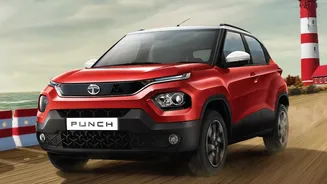
The price revision will be implemented across the entire Tata Motors passenger vehicle lineup. This means every car, from the entry-level Tiago and Tigor to the best-selling Punch and Nexon, will be affected. The popular Altroz hatchback, along with the flagship Harrier and Safari SUVs, are also included in this hike. Furthermore, the increase extends to the company's pioneering EV portfolio, which includes the Nexon EV, Tiago EV, and other electric variants. While Tata has not released a detailed model-wise price list yet, buyers can expect the new pricing structure to be shared with dealerships closer to the September 1 effective date. The principle is that the final price adjustment will be scaled to maintain the value proposition of each specific model and variant.
What This Means For Your Budget
An increase of 'up to ₹25,000' might seem manageable, but its impact goes beyond just the ex-showroom price. A higher ex-showroom cost directly inflates the on-road price of a vehicle, as registration fees, road tax, and insurance premiums are often calculated as a percentage of this base price. Consequently, the total amount you finance through a car loan will be higher. Even with the same interest rate and loan tenure, a larger principal amount translates to a higher Equated Monthly Instalment (EMI). For example, a ₹20,000 increase on the principal loan amount can add a noticeable sum to your monthly payments over a five- or seven-year period, increasing the total interest paid over the life of the loan. Prospective buyers should factor this cascading effect into their budget calculations.
Should You Buy Now or Wait?
This is the crucial question for anyone on the verge of a purchase. The most straightforward answer is that if you have already decided on a specific Tata model and variant, completing your purchase and ensuring the vehicle is invoiced before September 1, 2026, will save you from the price hike. Many dealerships may also be looking to clear existing inventory before the revised pricing kicks in, which could present an opportunity for negotiation or additional benefits. However, waiting has its own potential, albeit unguaranteed, advantages. Sometimes price hikes are accompanied by minor feature updates or new model-year changes, though this has not been announced. The decision ultimately rests on your personal timeline and financial readiness. If the car you want is available and your finances are in order, acting now is the most financially prudent choice to lock in the current price.