


What Exactly is a Cool Roof?
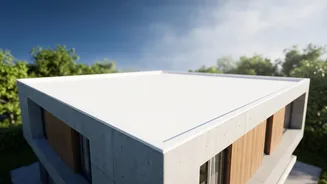
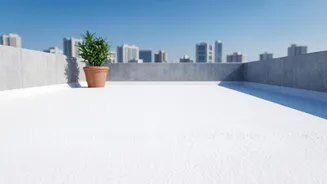
Think of a cool roof as sunscreen for your house. It’s a roofing system or a special coating applied to your existing roof that is designed to reflect more sunlight and absorb less heat than a standard roof. On a hot day, a traditional dark roof can reach
temperatures well over 70°C, radiating that heat down into your home. A cool roof, by contrast, can stay up to 33°C cooler, which significantly reduces the amount of heat transferred indoors. This simple principle helps keep your home naturally more comfortable, even during peak afternoon heat.
The Science of Saving Money
The effectiveness of a cool roof is based on two key properties: solar reflectance and thermal emittance. Solar reflectance, or albedo, is the measure of how much solar energy is reflected away from the roof. Thermal emittance is the roof's ability to release any heat it has absorbed. A high-quality cool coating has high values for both, meaning it not only bounces away the sun's rays but also efficiently sheds any heat it does absorb. This powerful combination means your air conditioner doesn't have to work nearly as hard to maintain a comfortable temperature, directly translating into lower energy consumption.
Real Savings and Benefits
The primary benefit for most homeowners is a noticeable reduction in electricity bills. Studies and real-world data show that cool roofs can lower cooling energy needs by 15% to 30% in homes that use ACs. This also reduces the strain on the electricity grid during peak demand. Beyond cost savings, these coatings improve indoor comfort for all, especially in homes without air conditioning, where they can lower indoor temperatures by 2-5°C. Furthermore, by reducing extreme temperature fluctuations on the roof's surface, these coatings protect the underlying material from thermal stress, potentially extending the life of your roof.
Smarter Coatings: What’s New in 2026
The technology behind cool roofs is constantly evolving. While traditional white elastomeric and acrylic coatings are still highly effective, recent innovations offer even better performance and durability. One of the most exciting developments is thermochromic coatings, which can actually change their reflectivity based on the temperature—reflecting heat in the summer and absorbing it in the winter. Other advancements include new polymer blends with embedded microscopic glass beads or microspheres that scatter infrared radiation more effectively. Some cutting-edge coatings even have self-healing properties, with microcapsules that rupture to seal minor scratches, preventing damage and prolonging the coating's life.
Not Just White Anymore
A common misconception is that a cool roof must be bright white. While white surfaces are naturally the most reflective, advancements in pigment technology now allow for a range of 'cool colours'. These specially formulated pigments can reflect infrared light—the invisible part of the solar spectrum that is responsible for most heat gain—even in darker shades like brown, green, and grey. This means homeowners no longer have to choose between aesthetics and energy efficiency. You can now select a colour that complements your home's design while still reaping the cooling benefits.
Considerations for Indian Homes
Before applying a cool roof coating, it’s important to ensure your roof is in good condition—clean, dry, and structurally sound. The cost of application in India can range from ₹20 to ₹50 per square foot, depending on the product quality and type of roof. While there is an upfront investment, the long-term energy savings and improved comfort often provide a strong return. In India's diverse climate, from the dry heat of the north to the humid conditions in coastal cities like Mumbai and Chennai, reducing indoor heat gain is crucial for both comfort and health. States like Telangana have even introduced cool roof policies to promote wider adoption, signalling a growing recognition of their benefits.