


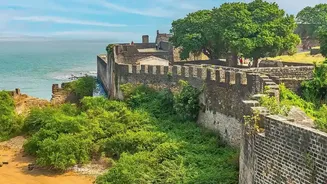
Beyond the famous names that dot Maharashtra’s stunning coastline lies a hidden gem steeped in Maratha naval history. This is a fort born of strategic ambition, a silent witness to a great rivalry played out on the waters of the Arabian Sea.
A Fort Born of Rivalry
While forts
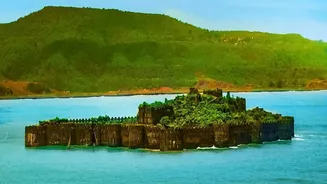
like Murud-Janjira and Sindhudurg are staples on the tourist map, Padmadurg remains one of the state's best-kept secrets. Also known as Kasa Fort, it was constructed in 1676 by Chhatrapati Shivaji Maharaj with a singular, audacious goal: to challenge the might of the Siddis of Janjira. For centuries, the unconquerable Janjira fort, a stronghold of the Siddis, had thwarted every Maratha attempt at capture. In a brilliant strategic move, Shivaji commissioned the construction of Padmadurg on a rocky island just a few kilometres away, intending it to be a naval base to launch attacks and control the entrance to the Rajpuri creek. This 'Lotus Fort', so named for its design resembling an open lotus flower, was a direct statement of Maratha naval ambition and a testament to their growing prowess in maritime warfare and engineering.
The 'Lotus Fort' in Ruins
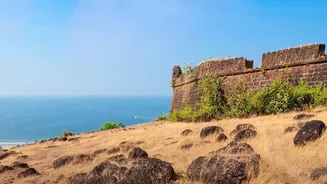
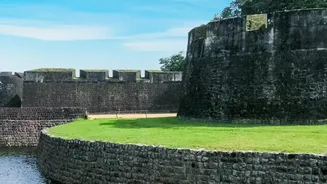
Today, what remains of Padmadurg is a captivating ruin that speaks volumes of its storied past. The fort's walls, though crumbling in places, still stand defiant against the relentless sea. Inside the complex, which is now protected by the Archaeological Survey of India, lie the remnants of its military past. During cleanup activities in recent years, authorities have discovered hundreds of historical cannonballs, a stark reminder of the fort's intended purpose. Exploring the fort feels like stepping back in time. You can trace the outlines of old barracks, water cisterns, and ammunition storage rooms. The air is thick with history, offering panoramic views of the vast Arabian Sea on one side and the imposing silhouette of its old rival, Janjira, on the other.
An Engineering Marvel
The very existence of Padmadurg is a marvel of 17th-century engineering. The transportation of massive stone blocks and construction materials across the open sea to build this fortress on a low-lying rock is a feat that continues to impress historians. It was not just a defensive outpost but also served as a key shipbuilding yard for the Maratha navy, allowing them to build and repair vessels right on the front lines of their conflict with the Siddis. The fort's design, with its multiple bastions and strategic cannon placements, showcases the sophisticated understanding of naval defence and coastal control that Shivaji Maharaj instilled in his forces. He recognised that to control the land, he first had to master the sea, and forts like Padmadurg were the cornerstones of this powerful maritime strategy.
Planning Your Visit
Reaching Padmadurg is an adventure in itself. Unlike its more accessible counterparts, a visit here requires some planning. The fort is located near the coastal town of Murud in the Raigad district. To get to the fort, one must hire a local fishing boat from the shores of Murud-Koliwada. It's important to note that access isn't always guaranteed and can depend on the weather, the tides, and may require permission from local authorities like the Navy or Customs since it is a protected site. The boat ride offers a stunning perspective of the coastline and builds anticipation for the historical treasure that awaits. The best time to visit is outside of the heavy monsoon season, when the seas are calmer and the journey is safer. For those willing to make the effort, the reward is an intimate encounter with a piece of history, far from the usual tourist crowds.