




Step 1: Prep the Load
Your journey to dry clothes begins before they even leave the washing machine. First, consider washing smaller loads more frequently rather than one large batch. Smaller loads dry faster and are less likely to create a mountain of damp laundry. When washing,
add a natural deodoriser like half a cup of white vinegar or baking soda to the rinse cycle. Vinegar acts as a natural disinfectant and fabric softener, while baking soda neutralises the acidic compounds that cause odours. Finally, give your laundry an extra spin cycle in the machine. Removing as much excess water as possible is the most critical first step to cutting down indoor drying time.
Step 2: Designate and Ventilate Your Zone
Not all indoor spaces are created equal. Choose a room with the best possible ventilation, like one with a window you can crack open or a balcony shielded from the rain. A bathroom can also work well, as you can let clothes drip over the tub first. The goal is to create consistent airflow. A pedestal fan or even a ceiling fan aimed at your drying rack can dramatically speed up evaporation by moving damp air away from the fabric. Without airflow, moisture gets trapped around the clothes, creating the perfect environment for that dreaded musty smell to develop.
Step 3: Master the Art of Hanging
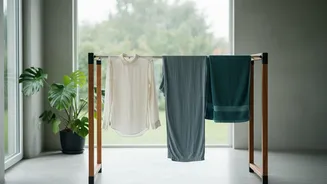
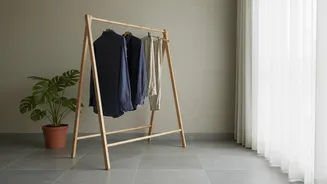
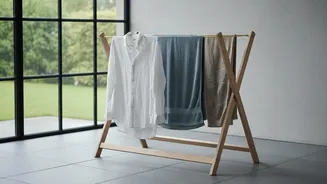
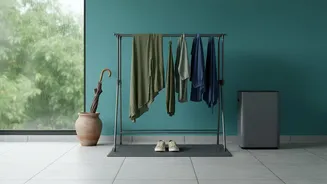
How you hang your clothes is just as important as where you hang them. Before anything goes on the rack, give each item a good, firm shake to straighten out fibres and reduce creases. The golden rule of indoor drying is to avoid overcrowding. Each garment needs its own personal space for air to circulate freely. If clothes are touching, moisture gets trapped between them, slowing down drying and causing odours. Use hangers for shirts, blouses, and trousers; this helps them maintain their shape and allows for 360-degree airflow. Heavier items like jeans and towels should be separated from lighter fabrics and placed where airflow is strongest.
Step 4: Actively Dehumidify the Air
High humidity is the main enemy of indoor drying. You can combat this with a few clever tricks. If you own a dehumidifier, place it in the room with your laundry and close the door to create a concentrated drying zone. An air conditioner running in 'dry' mode will also pull moisture from the air. For a low-tech solution, place bowls of rock salt, unrefined sea salt, or even baking soda in the corners of the room. These substances naturally absorb excess moisture from the air, helping to prevent the formation of mould and fungus.
Step 5: The Final Check and Finishing Touches
Even when clothes feel dry on the outside, moisture can linger in thicker areas like collars, seams, and waistbands. Before folding anything away, run your hand over these spots to ensure they are completely dry. If you find any lingering dampness, a hot iron can quickly solve the problem by steaming away the last traces of moisture. This is especially effective for thick garments like jeans and sweaters. Once dry, don't immediately stuff them into a crowded wardrobe. Make sure your cupboards are also dry by using moisture absorbers like silica gel packets or camphor balls to protect your fresh, clean clothes.