








Your Pocket Planetarium
The magic of modern astronomy is its accessibility. You no longer need a bulky telescope or complex star charts to navigate the cosmos. Several brilliant mobile applications can turn your smartphone into an augmented-reality window to the universe. For
beginners, a few apps stand out for their simplicity and power. SkyView Lite, Star Walk 2, and Stellarium Mobile are all excellent free options available for both Android and iOS devices. These apps use your phone's GPS and compass to know exactly where you are and what you're pointing at, overlaying the names of stars, constellations, and planets on your screen in real time. Simply download one, grant it location access, and you're ready to begin your cosmic tour.
A Simple Step-by-Step Guide
Using these apps is incredibly intuitive. Once installed, take a moment to calibrate your phone’s compass by moving it in a figure-eight pattern. Then, head outside and point your phone towards the sky. The app will display a live map of the celestial objects in that direction. The brightest “stars” that don’t twinkle are often planets. To confirm, just center the bright object on your screen, and the app will identify it for you. Many apps, like SkyView Lite, allow you to tap on an object to learn more about it, see its path across the sky, and even travel through time to see its position on different dates. The augmented reality (AR) feature uses your camera to overlay this information directly onto your view of the night sky, making identification seamless and fun.
What to Look For Tonight
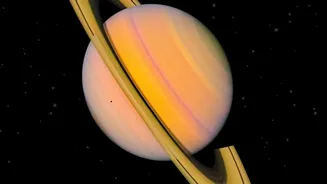
In September 2026, the evening sky offers some spectacular sights for city dwellers. Shortly after sunset, look to the west for the planet Venus, which will be exceptionally bright all month. It’s so brilliant that it's often mistaken for an airplane, but its steady, unwavering light gives it away. As the night deepens, turn your gaze to the east to find Saturn rising. This yellowish-hued planet will be visible for most of the night, offering a steady target for your new app. While you won’t see its famous rings without a telescope, simply identifying this distant gas giant from your balcony is a profound experience. For early risers, the pre-dawn sky is dominated by the very bright, white light of Jupiter in the east, with reddish Mars also visible.
Tips for the Urban Astronomer
City lights can be a challenge, but they don't make planet-spotting impossible. Planets are much closer and brighter than distant stars, allowing their light to punch through the urban glow. To improve your experience, find the darkest spot you can—a park, a rooftop, or even just a corner of your balcony that’s shielded from direct streetlights. Turn off any lights in your immediate vicinity. Most importantly, give your eyes time to adapt. It takes about 20-30 minutes for your vision to adjust to the darkness, which will help you see fainter objects. Lastly, be patient. The slow, majestic march of the planets across the sky is a reward in itself.