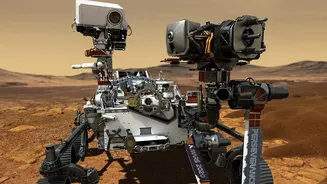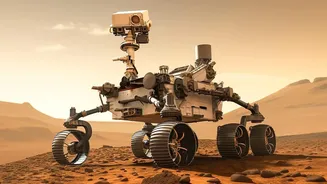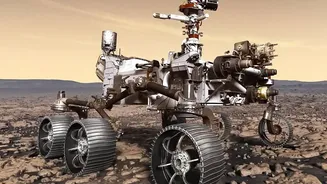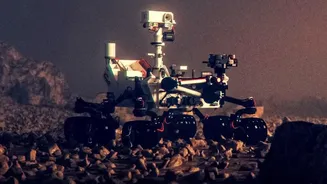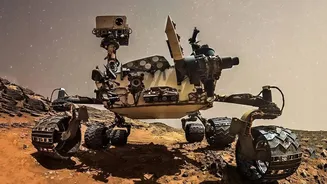



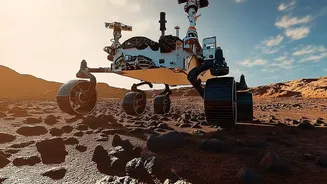
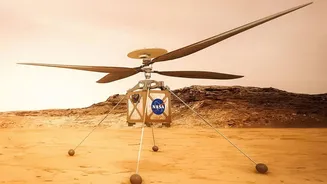
For years, NASA's Perseverance rover has collected precious rock samples on Mars. Now, the agency has unveiled a bold new plan to bring them home, tackling immense cost and engineering challenges to finally answer the question: was there ever life on Mars?
A New Blueprint for Mars
NASA has officially kick-started a new strategy for its ambitious but troubled Mars Sample Return (MSR) mission. Announced on November 9, 2026, the new initiative is called the Perseverance Sample Retrieval Architecture, or PSRA. This framework is NASA's response to independent reviews that flagged the previous plan's ballooning budget and schedule. The primary goal of the PSRA is to develop a more streamlined and cost-effective approach to retrieving the priceless rock, soil, and atmosphere samples collected by the Perseverance rover and getting them back to Earth for study in advanced laboratories. It represents a critical pivot, designed to ensure the decade-defining scientific objectives of the mission can still be achieved within a realistic budget and timeframe.
Addressing Old Challenges
The Mars Sample Return mission has long been a top priority for the scientific community, but its complexity has led to significant hurdles. Previous plans involved a multi-stage, multi-spacecraft endeavor in partnership with the European Space Agency (ESA). However, independent reviews highlighted major issues, with cost estimates soaring to as much as $11 billion and the return date pushed back to 2040. NASA deemed this unacceptable. The escalating costs and extended timeline threatened to cannibalize funding for other vital planetary science missions. The PSRA was born out of this necessity to go back to the drawing board, reassess every component of the mission, and find a more achievable path forward without sacrificing the core scientific promise.
A Leaner Interplanetary Relay
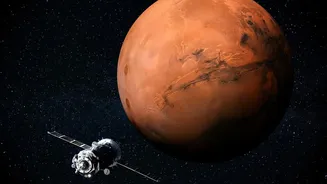
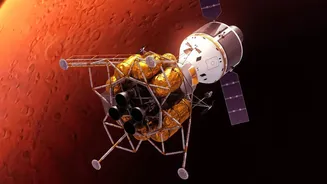
So, how is the new plan different? The key is simplification. While the previous architecture involved multiple landers, including a dedicated 'fetch' rover to collect sample tubes, the new concept leans heavily on the proven capabilities of the Perseverance rover. The current strategy will rely on Perseverance, which remains healthy and operational, to drive its cache of samples directly to a single, consolidated Sample Retrieval Lander. This lander will still house a crucial piece of technology: the Mars Ascent Vehicle (MAV), a small rocket that will launch the canister of samples into Martian orbit. From there, an ESA-provided Earth Return Orbiter will autonomously capture the sample canister, secure it, and begin the long journey back to Earth. This revised 'ship-and-shoot' approach reduces the number of new vehicles and complex surface operations required.
Perseverance Takes Center Stage
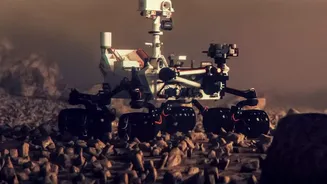
The success of the PSRA plan now hinges more than ever on the longevity of the Perseverance rover. Since landing in Jezero Crater in February 2021, the car_sized robot has been diligently drilling and sealing scientifically selected samples into over three dozen titanium tubes. It has also strategically dropped a backup depot of ten sample tubes on the Martian surface as a contingency. Under the new plan, Perseverance’s prime mission is extended. It will not only continue its scientific exploration but will also be tasked with the critical role of primary transport, carrying its onboard samples to the lander's location. This reliance on a rover that has already endured years of the harsh Martian environment is a calculated risk, but one that drastically reduces the mission's overall complexity and cost.
The Road and Race Ahead
The unveiling of the PSRA is just the beginning of a renewed effort. A strategy team will officially kick off its work in January 2027, with a final report outlining the refined architecture expected in the winter of 2027–2028. This review will evaluate everything from mission requirements to acquisition options. Adding a sense of urgency is the progress of other nations; China's Tianwen–3 sample return mission is reportedly on track to launch around 2028 and return its samples by 2031. While NASA’s new plan targets a potential return in the mid–2030s for around $8 billion, the pressure is on to finalize a workable and funded mission that can maintain U.S. leadership in planetary exploration and deliver on a scientific promise decades in the making.