





In the landscape of Indian cuisine, ghee is a constant. But the debate between cow and buffalo ghee persists. While both are cherished, their differences lie in science, not sorcery, influencing everything from nutrition to culinary application.
The Visual Difference: Yellow vs. White
The most
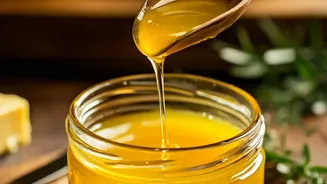
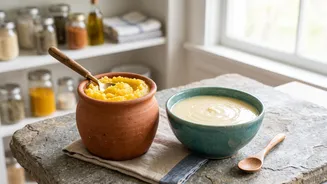
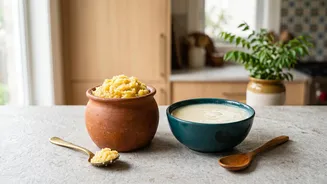
apparent difference is colour. Cow ghee is typically a vibrant golden yellow, while buffalo ghee is a creamy white. This isn't a sign of purity or quality, but simple biology. Cows pass beta-carotene, a pigment from their plant-based diet, directly into their milk fat. Our bodies then convert this beta-carotene into Vitamin A. Buffaloes, on the other hand, have a more efficient system that converts almost all beta-carotene into colourless Vitamin A before it ever reaches the milk. So, while the final Vitamin A content can be comparable, the yellow pigment is only present in cow ghee.
A Tale of Two Fats: Nutrition and Composition
The fundamental distinction begins with the milk itself. Buffalo milk contains significantly more fat—around 6-8% compared to 3.5-4.5% in cow milk. This means it takes less buffalo milk to produce a kilogram of ghee, often making it a more economical choice for large-scale production. Nutritionally, this higher fat content makes buffalo ghee denser in calories. Cow ghee is generally considered lighter and easier to digest due to a higher proportion of shorter-chain fatty acids. It also contains slightly more polyunsaturated fatty acids. In contrast, buffalo ghee is richer in saturated fats. While both contain essential fat-soluble vitamins like A, D, E, and K, some sources suggest cow ghee has a slight edge in vitamin content.
In the Kitchen: Flavour, Texture, and Best Uses
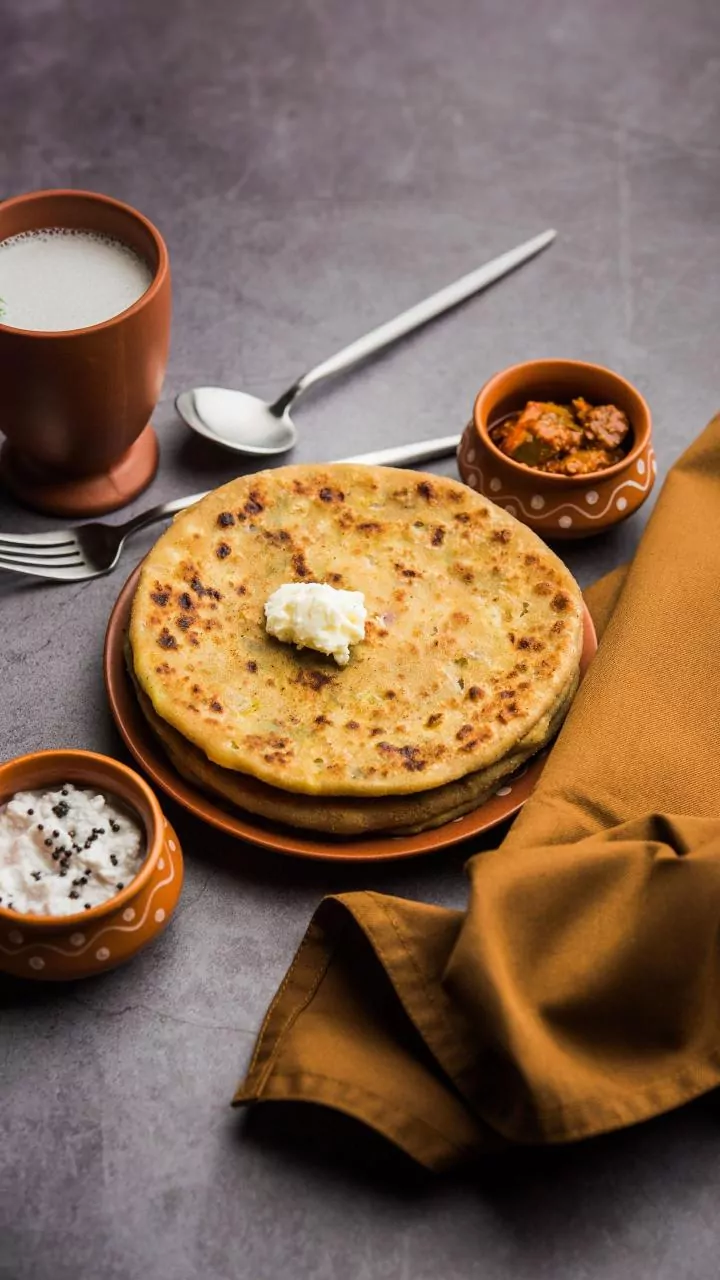
These compositional differences translate directly to their performance in the kitchen. Buffalo ghee’s higher fat content gives it a richer, more intense flavour and a denser, creamier texture. This makes it ideal for making traditional sweets like ladoos and halwas, where a rich body is desired. Its slightly higher smoke point also makes it suitable for high-heat cooking and deep-frying. Cow ghee has a lighter, nuttier flavour that complements everyday dishes without overpowering them. It’s the preferred choice for drizzling over dal, rice, and rotis, or for a simple tadka. Its granular, or 'danedar', texture is often seen as a sign of a quality batch made using traditional methods.
Health Perceptions: Ayurveda and Modern Science
Ayurveda traditionally holds cow ghee in high regard, considering it 'satvic' and beneficial for balancing all doshas. It is often recommended for children and the elderly due to its easier digestibility. Buffalo ghee is seen as a 'tamasic' food, providing dense energy and heat, making it more suitable for those engaged in heavy physical labour or during winter. From a modern nutritional perspective, the choice is less about inherent superiority and more about individual needs. For those managing cholesterol or seeking a lighter fat for daily consumption, cow ghee is often the recommended choice due to its lower saturated fat content. For individuals looking to gain weight or needing a high-energy fat source, buffalo ghee can be more suitable.