





The New Creative Toolkit
At the heart of this shift are AI-powered design tools. Platforms like Adobe Firefly, Midjourney, and Canva's Magic Studio are no longer niche technologies; they are becoming standard in the creative workflow. For freelancers, these tools dramatically
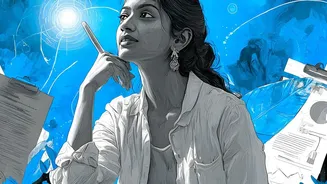
accelerate the creative process. What once took hours of manual work in Photoshop or Illustrator—like creating concept visuals, generating background images, or designing social media posts—can now be accomplished in minutes. This isn't about replacing creativity but augmenting it. AI acts as a tireless assistant, handling repetitive tasks and providing a constant stream of inspiration, allowing designers to focus on higher-level strategy, client communication, and refining the final product.
The Tier 2 Advantage
For decades, opportunity in India was synonymous with migration to megacities like Mumbai or Bengaluru. That narrative is changing. The rise of remote work, accelerated in recent years, has decoupled employment from geography. This has been a game-changer for India's secondary or Tier 2 cities. These urban centres—such as Pune, Indore, and Visakhapatnam—offer a compelling proposition: a significantly lower cost of living combined with improving infrastructure. A freelancer in Indore can earn a competitive income from national or even international clients while enjoying affordable housing and a better quality of life than what's often possible in an overcrowded, expensive metro. This 'reverse brain drain' sees skilled professionals choosing to work from their hometowns or relocating to these emerging hubs.
Democratising Design Careers
AI tools also play a crucial role in democratising access to the creative profession. They lower the technical barrier to entry, enabling individuals with strong creative ideas but less formal training to produce professional-quality work. This expands the talent pool far beyond those who have completed traditional design education. Platforms like Upwork and Fiverr, alongside local networks often managed through WhatsApp, connect these freelancers with a vast market of small and medium-sized businesses (SMEs) in India and abroad. These SMEs need affordable, high-quality design work for their websites, social media, and marketing materials, creating a steady stream of demand that freelancers in Tier 2 cities are perfectly positioned to meet.
More Than Just Tools
The growth is not just about individuals. A supporting ecosystem is rapidly developing in these cities. The demand for flexible work arrangements has led to a surge in co-working spaces, with Tier 2 cities now hosting nearly 29% of India's total. Cities like Coimbatore have seen a 41% rise in workspace visits, indicating a strong move towards hybrid work models that blend remote flexibility with physical collaboration hubs. Companies are also taking note, with major firms like Infosys opening new centres in cities such as Nagpur and Hubballi, further validating their status as emerging economic engines. This creates a virtuous cycle: as more talent and companies settle in these cities, they attract further investment and infrastructure development.
The Human Element Remains Key
Despite the rapid advancements in AI, the most successful freelancers are those who combine technological proficiency with uniquely human skills. AI can generate an image, but it cannot understand a client's business goals, negotiate a brief, or build a long-term relationship. The market is shifting away from freelancers who simply know how to use AI tools towards professionals who integrate AI into a broader skill set that includes problem-solving, strategic thinking, and client management. As routine tasks become automated, the value of human creativity, curation, and critical judgment only increases. The future belongs not to the AI, but to the creative professional who wields it most effectively.