
More Than a Simple Stretch
Known in Sanskrit as Marjaryasana (Cat) and Bitilasana (Cow), this sequence is a foundational part of many yoga practices for a reason. It's a gentle flow designed to awaken the body, improve flexibility in the spine, and release tension in the back,
neck, and shoulders. Think of it as a reset button. After hours spent sitting at a desk or looking at a phone, the spine can become stiff and compressed. Cat-Cow counteracts this by encouraging movement through each vertebra, promoting better posture and alleviating discomfort. Its value lies in its simplicity and its ability to prepare the body for deeper movements while also serving as a restorative pause within a practice.
Understanding Flexion and Extension
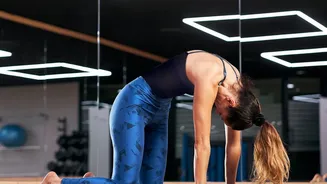
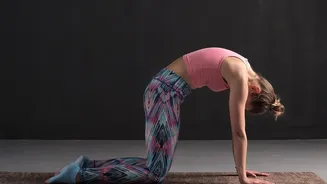
The headline mentions two key terms: spinal flexion and extension. Understanding these is key to unlocking the pose's benefits. In the simplest terms, flexion is rounding the back, and extension is arching it. In Cat Pose, you are moving into spinal flexion. As you exhale and round your spine toward the ceiling, you're stretching the muscles of your back. In Cow Pose, you are moving into spinal extension. As you inhale and drop your belly, you are gently arching your back and opening your chest. This alternating movement gently mobilizes the entire spine. Rather than hinging at one point, the goal is to create a smooth, wave-like motion that articulates each spinal segment.
How to Perform Cat-Cow
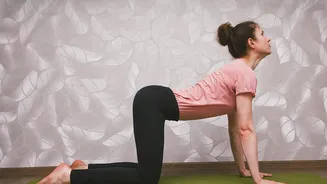
Start on your hands and knees in a 'tabletop' position. Your wrists should be directly under your shoulders and your knees directly under your hips. Keep your back in a neutral, flat position. Spread your fingers wide to distribute your weight evenly. For Cow Pose (Extension): On an inhale, gently drop your belly toward the mat. Lift your chest and tailbone up toward the ceiling, creating an arch in your spine. Allow your gaze to lift forward without straining your neck. Draw your shoulders away from your ears. For Cat Pose (Flexion): On an exhale, press into your hands and round your spine toward the ceiling, like a cat stretching. Draw your belly button toward your spine and allow your head to release toward the floor, bringing your chin toward your chest without force. Flow continuously between these two poses, letting your breath guide the movement. Aim for 5-10 cycles.
Common Mistakes and Modifications
To get the most out of Cat-Cow, pay attention to your form. A common mistake is moving too quickly and not syncing the movement with your breath. Another is leading with the head and neck instead of initiating the movement from the tailbone and pelvis. Your neck should be a natural extension of your spine. If you have sensitive knees, place a folded blanket or towel underneath them for cushioning. For those with wrist pain, you can modify the pose by placing your hands on yoga blocks or coming down onto your forearms. If you have a back injury or are pregnant, it's advised to focus on keeping the spine neutral and avoiding the deep belly drop in Cow Pose, which can strain the lower back.
Benefits Beyond Back Health
While Cat-Cow is celebrated for its spinal benefits, its positive effects ripple throughout the body. The gentle movement stimulates and massages abdominal organs, which can aid in digestion. By opening the chest in Cow Pose, it encourages deeper breathing. Coordinating breath with movement has a calming effect on the mind, helping to relieve stress and improve your mind-body connection. Regular practice enhances body awareness and balance, which contributes to better posture in your daily life. It’s a simple, low-load way to keep your back moving safely and support the long-term health of your spine.