



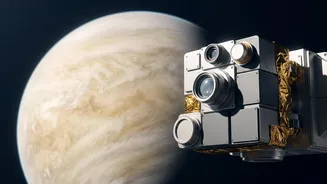
India’s Next Interplanetary Leap
Fresh off the triumphs of its Chandrayaan lunar missions and the Mars Orbiter Mission (Mangalyaan), the Indian Space Research Organisation (ISRO) is embarking on its next great adventure in the solar system. The destination is Venus, the second planet
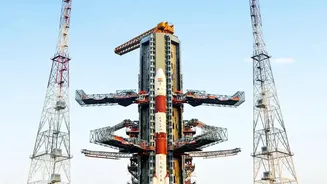
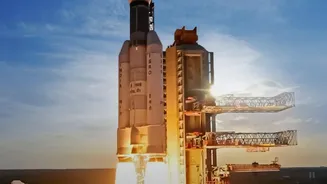
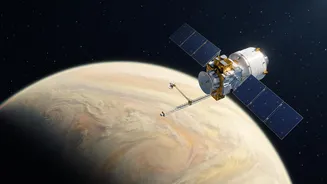
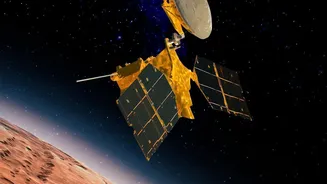
from the Sun and a world of intense scientific interest. Officially named the Venus Orbiter Mission (VOM), but popularly known as Shukrayaan (Sanskrit for “Venus Craft”), this mission represents a logical and ambitious step in India’s space exploration journey. Formally approved by the Union Cabinet in September 2024 with a budget of approximately ₹1,236 crore, Shukrayaan is scheduled to launch aboard India's heavy-lift LVM-3 rocket on March 29, 2028. Following a 112-day journey, the orbiter is expected to arrive at Venus on July 19, 2028, positioning India among a select group of space agencies to have explored our sister planet.
Why Venus? Earth's Cautionary Tale
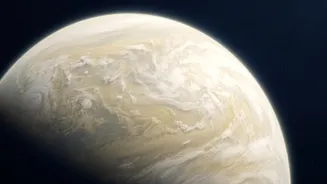
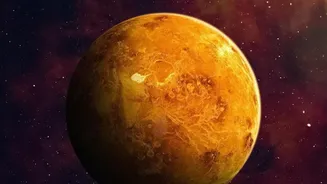
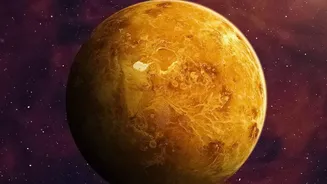
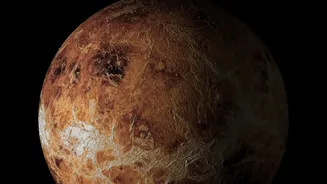
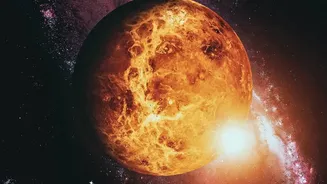
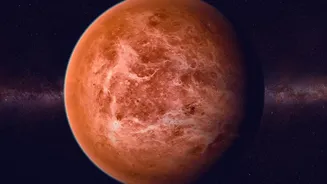
Often called Earth's twin due to their similar size and origin, Venus evolved into a vastly different and hostile world. Its surface temperature is a scorching 467°C, hot enough to melt lead, under a crushing atmospheric pressure 93 times that of Earth's. The planet is perpetually shrouded in thick, opaque clouds of sulfuric acid. Scientists are fascinated by how two planets that started so similarly could have such divergent fates. Venus is believed to have undergone a runaway greenhouse effect, a scenario that serves as a critical case study for understanding climate change dynamics on our own planet. Studying Venus can provide invaluable insights into planetary evolution, atmospheric processes, and what happens when a planet's climate spirals out of control.
A Toolkit for a Hostile World
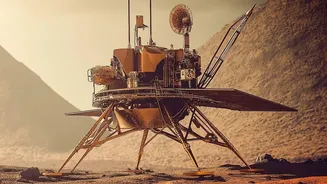
To peer beneath the dense clouds and analyse the toxic air, Shukrayaan will carry a payload of approximately 100 kg, comprising around 19 scientific instruments from India and international partners, including Sweden, Russia, and Germany. A key instrument is a high-resolution Synthetic Aperture Radar (SAR), designed to map the planet's surface and subsurface geological features, looking for evidence of active volcanoes and lava flows. Another ground-penetrating radar will perform the first-ever subsurface study of Venus. Other sensors will focus on the headline goal: probing the atmospheric chemistry. Instruments like the Venus Ionospheric and Solar Wind particle Analyser (VISWAS) will study the interaction between the solar wind and the Venusian ionosphere, helping scientists understand how Venus lost its water and lacks a protective magnetic field like Earth's. A thermal camera and cloud monitoring tools will investigate the atmosphere's mysterious super-rotation, where winds circle the planet much faster than the planet itself rotates.
The Scientific Mysteries to Solve
The mission has several core scientific objectives. Firstly, it aims to create a comprehensive map of Venus's surface and subsurface geology, which remains poorly understood. Secondly, and crucially, it will analyse the composition and dynamics of the atmosphere in detail. This includes studying the chemical cycles, the composition of the sulfuric acid clouds, and looking for answers to why the atmosphere contains a mysterious substance that absorbs ultraviolet radiation. One tantalising possibility the mission may re-examine is the disputed 2020 claim of phosphine detection in the clouds—a gas that, on Earth, is associated with biological processes. While that finding is now considered likely to be an error, Shukrayaan's advanced instruments could provide a definitive answer. The mission will also investigate how Venus loses its internal heat and whether its volcanoes are still active, a key factor in sustaining its thick cloud deck.