






The Limits of the Lone Explorer
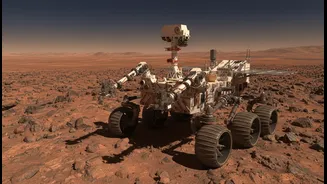
NASA’s rovers, from Sojourner to Perseverance, are marvels of engineering. They have delivered breathtaking science and fundamentally reshaped our understanding of Mars. But they have also highlighted the immense challenges of exploring another world.
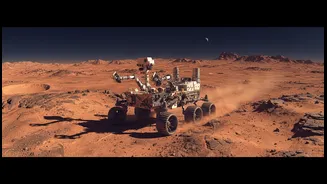
Missions like Spirit and Curiosity have battled treacherous terrain that has pushed their hardware to the absolute limit. Spirit’s mission ended after it became permanently trapped in soft soil. Curiosity has suffered significant wheel damage from sharp, embedded rocks, forcing its drivers at JPL to develop creative and sometimes backward driving techniques to preserve its mobility. These experiences have taught NASA a crucial lesson: for all their resilience, single, heavy rovers are vulnerable. Certain scientifically fascinating areas, like steep crater walls or rugged highlands, remain tantalizingly out of reach.
A New Strategy Called STRIDE
In response to these challenges, NASA has initiated a new program called STRIDE, which stands for Science Transport and Robotic Innovation for Deployment and Exploration. On July 8, 2026, the agency awarded a total of $17 million in contracts to seven companies, signaling a major shift toward public-private partnerships for surface technology. The awardees represent a mix of established aerospace giants and innovative robotics firms: AeroVironment, Astrobotic, Venturi Astrolab, Ground Control Robotics, Honeybee Robotics, Intuitive Machines, and MEI Technologies. The goal is not to build one specific rover, but to foster a range of new ideas and commercial capabilities for robotic mobility on Mars. NASA is effectively asking the private sector to help imagine a new toolkit for exploring the Red Planet.
Smarter, Tougher, and Working Together
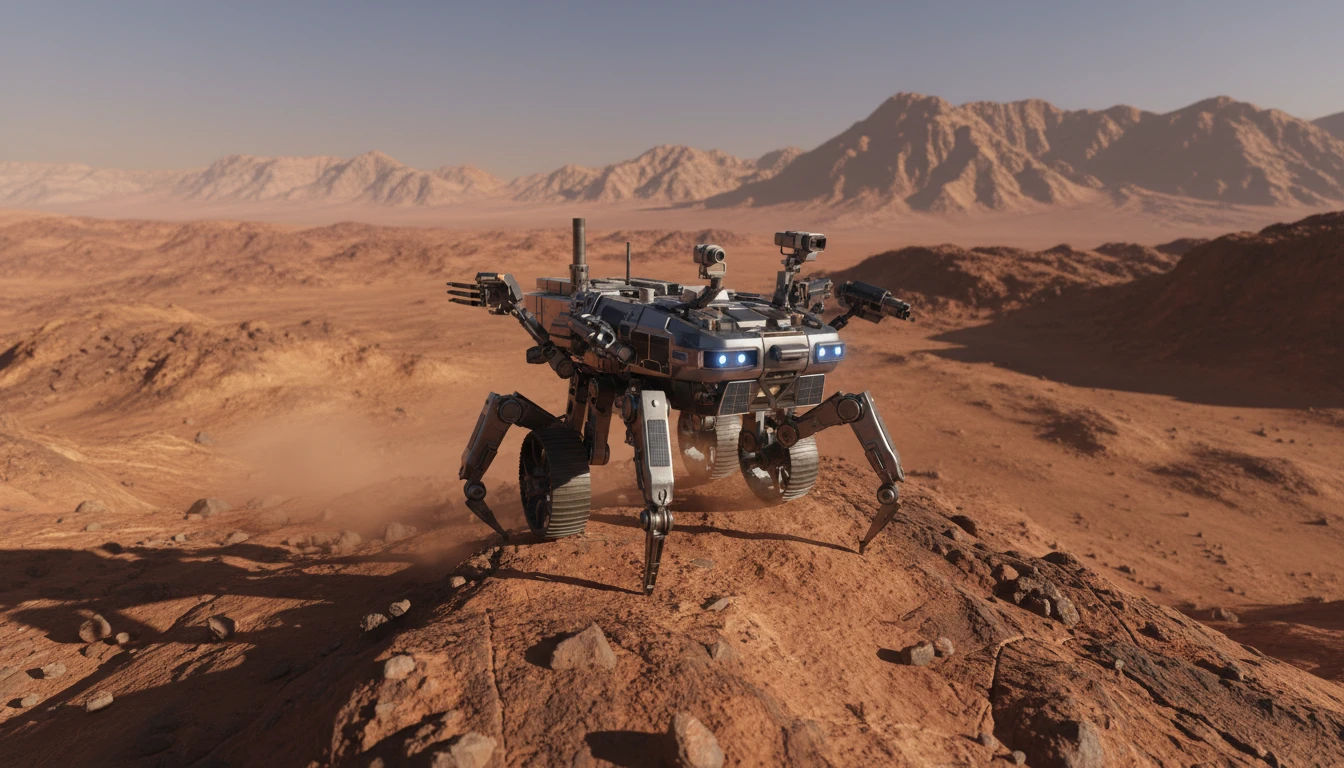
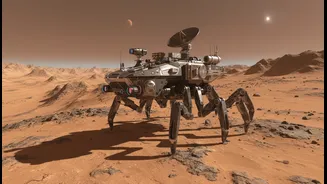
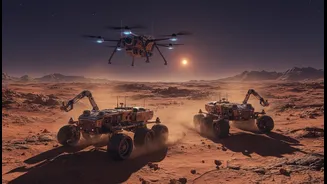
The core objective of the STRIDE contracts is to develop systems that can go farther and access the difficult terrain that current rovers cannot. This isn't just about building better wheels. The initiative is exploring concepts that could revolutionize how we conduct science on other planets. One key area is cooperative robotics. Instead of a single, high-value asset, future missions might deploy teams of smaller, autonomous robots that work together. While not directly part of STRIDE, NASA's CADRE project, which will send three shoebox-sized rovers to the Moon to map it as a team, showcases this thinking. Such multi-robot systems could share the workload, create 3D maps, and take risks that would be unacceptable for a solitary rover. Another focus is advanced mobility. This includes new wheel designs, leg-based robots, or even hybrid systems that can navigate steep slopes and loose sand, problems that have plagued past missions.
The Future is Also Aerial
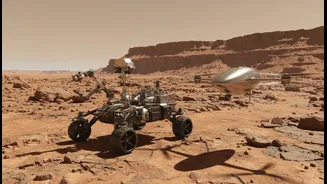
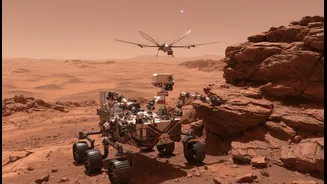
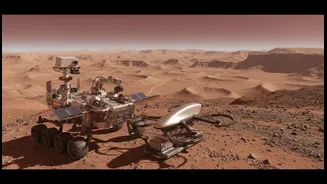
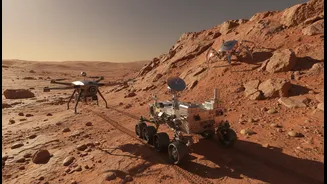
The stunning success of the Ingenuity helicopter, which proved powered flight was possible in Mars's thin atmosphere, opened a new dimension for exploration. It's no surprise that AeroVironment, the company that built Ingenuity, is among the seven firms selected for a STRIDE contract. Future missions could lean heavily on aerial platforms. Drones could serve as scouts for rovers, mapping out the safest and most scientifically interesting paths ahead. They could also gather data from areas completely inaccessible to ground vehicles, like the cliffs of Valles Marineris or the inside of deep, fresh craters. While STRIDE's focus is broad, the inclusion of a pioneer in planetary flight suggests that the future of Mars exploration involves a partnership between ground and air, with robots of all shapes and sizes working in concert.