




A Spectacle in the High Himalayas
The Hemis Festival unfolds at the Hemis Monastery, Ladakh's largest gompa. Tucked in a gorge, this 17th-century institution becomes the epicentre of Ladakhi culture for two days each summer. Thousands of people—local Ladakhis in their finest traditional
dress, monks in maroon robes, and travellers from across the globe—gather in the monastery's courtyard. The atmosphere is electric, a vibrant social event set against ancient murals and breathtaking mountains. The scent of butter lamps mixes with crisp mountain air as everyone waits for the main event.
The Meaning Behind the Masks
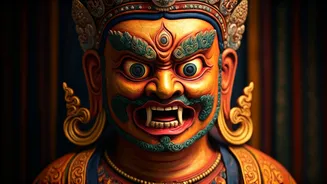
The heart of the festival is the sacred Cham dance, a profound tantric ritual. The dancers are lamas who have spent weeks in prayer and meditation. Donning elaborate silk costumes and larger-than-life masks, they transform into deities and demons from Buddhist lore. Each movement is a stylized gesture, each mask a symbol. The slow, circling steps are a form of moving meditation, intended to subdue evil spirits, impart moral teachings, and bring blessings. Watching the Cham is to witness a sacred story unfold, a battle between good and evil in a mesmerising, slow-motion ballet.
Celebrating a Spiritual Master
The festival commemorates the birth of Guru Padmasambhava, or Guru Rinpoche, the 8th-century master who established Buddhism in Tibet. He is revered as the 'Second Buddha' across the Himalayas. His mission was to vanquish demons obstructing the spread of dharma, and the dances at Hemis are a direct re-enactment of his triumphs. The festival is a powerful reaffirmation of his legacy and the victory of Buddhist teachings. A highlight for many is the rare unfurling of a giant thangka, or silk painting, of the Guru, an event happening only once every 12 years.
More Than Just a Dance
While the dances are the main draw, the festival is a vital community event. For people from isolated villages, it is a chance to reconnect, trade goods, and strengthen bonds. The monastery's periphery transforms into a bustling bazaar selling handicrafts and local food like momos and sweet tea. It is a social fair, spiritual pilgrimage, and cultural celebration rolled into one. For visitors, this offers a unique window into Ladakhi society, where ancient traditions and modern life coexist, seeing the culture not as a museum piece, but as a living entity.
The Journey for Authenticity
What draws 'culture seekers' here? The promise of an authentic, undiluted experience. In a world of curated digital realities, Hemis offers something raw and real. The journey requires effort—acclimatizing to high altitude, navigating mountain roads—but the reward is immense. Travellers come not just to see, but to feel. They come to witness a tradition passed down through centuries, feel the spiritual energy of the chants, and be humbled by the scale of the landscape and the depth of faith on display. It is a pilgrimage, even for the non-religious, a search for meaning in a spiritually charged place.