



Building Your Foundation
Like any strong tree, this pose begins from the ground up. Start by standing in Tadasana (Mountain Pose) with your feet together or hip-width apart. Spread your toes and press firmly through all four corners of your standing foot. This creates a stable
base. Gently shift your weight onto one leg, for instance, the left leg, without locking the knee. Engage your thigh muscles by drawing the kneecap up. This 'zipping up' action creates a strong, supportive pillar for your body. Keep a micro-bend in the standing knee to avoid hyperextension and potential injury.
Choosing Your Foot Placement
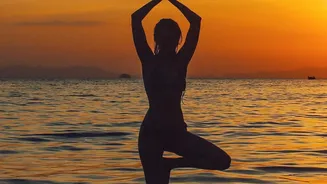
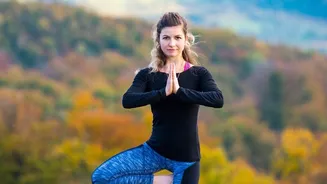
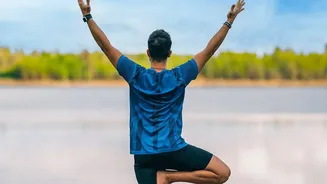
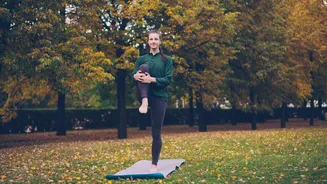
The next step is to find the right position for your raised foot. There are three primary options, and it's crucial to choose the one that works for your body today. For beginners, the 'low branch' is a great start: place the sole of your right foot against your left ankle, keeping your right toes on the floor like a kickstand. As you gain confidence, you can move to the 'medium branch' by placing your foot on your inner calf. The most advanced variation, the 'high branch', involves placing your foot on your inner thigh. The one place you must always avoid is placing your foot directly on the side of your knee joint, as this can create dangerous pressure and instability.
Finding Stability and Stillness
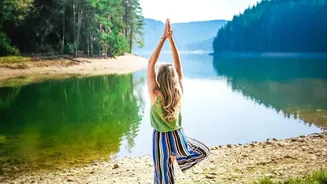
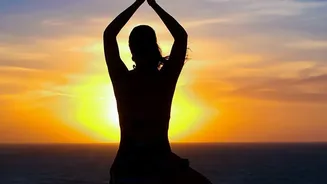
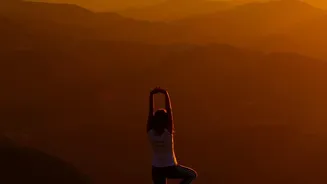
Balance is as much a mental game as a physical one. To steady yourself, find a 'drishti', or a fixed point of focus, on something in front of you that isn't moving. Staring at a spot on the wall or floor will help calm your mind and, in turn, your body. Keep your hips level and square to the front, resisting the urge to jut the hip of your standing leg out to the side. If you notice one hip is higher than the other, gently guide it down. Press the sole of your raised foot and your standing leg firmly into each other to create an active, stable connection. Your hands can rest at your heart in a prayer position (Anjali Mudra), on your hips, or extend overhead like branches reaching for the sun.
Modifications for Every Body
Remember that balance fluctuates daily. If you're feeling unsteady, don't hesitate to use a wall or a chair for support. Standing near a wall allows you to regain balance with a simple touch of your fingertips. This support can help you build confidence and muscle memory without the fear of falling. For those with tighter hips, keeping the bent knee pointing more forward rather than directly out to the side is a perfectly acceptable modification. The goal is stability and alignment, not forcing your body into a specific shape. The pose's benefits come from consistent and safe practice, not from achieving the most difficult variation on day one.
Benefits Beyond Better Balance
While the most obvious benefit of Tree Pose is improved balance, its effects are far-reaching. The posture strengthens the muscles in your ankles, calves, thighs, and core. This fortification of the leg muscles and stabilizers helps with posture and can reduce the risk of falls, which is particularly beneficial as we age. Mentally, the intense focus required for Vrksasana helps sharpen concentration and cultivate a sense of calm and presence. It teaches you to find stillness amidst the wobble, a skill that is just as valuable off the mat as it is on it.