


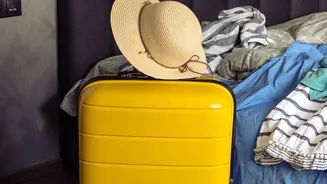

The Clothing Strategy: Think Quick-Dry and Multi-Purpose
Your fabric choice is the single most important decision. Leave the jeans and heavy cottons at home; in high humidity, they take forever to dry and become heavy. Instead, build your wardrobe around lightweight, synthetic fabrics like polyester, nylon,
and rayon. These materials are breathable and dry remarkably fast, even in a non-air-conditioned room. Pack three to four tops and two pairs of quick-dry trousers or knee-length pants. For women, lightweight long skirts or kurtas made from synthetic blends are excellent choices. The key is to pack items that can be easily washed in a sink and will be dry by the next morning. A versatile, high-quality waterproof jacket is non-negotiable. It will serve as your primary shield against downpours and can double up as a light layer on cooler evenings.
Footwear: Your First Line of Defence
The wrong shoes can ruin a monsoon trip. Leather will be destroyed, and canvas sneakers will become waterlogged and smelly. Your best bet is a pair of rubber floaters, waterproof sandals, or Crocs. They provide good grip on slippery surfaces, don't get damaged by water, and are easy to rinse off. These will be your go-to footwear for walking around. It’s also wise to pack a pair of lightweight, dry slippers or sandals to wear inside your hotel room, giving your feet a chance to breathe and dry out completely. Whatever you do, make sure the footwear you choose is well-worn and comfortable to avoid blisters.
The Gear Edit: Waterproof Everything
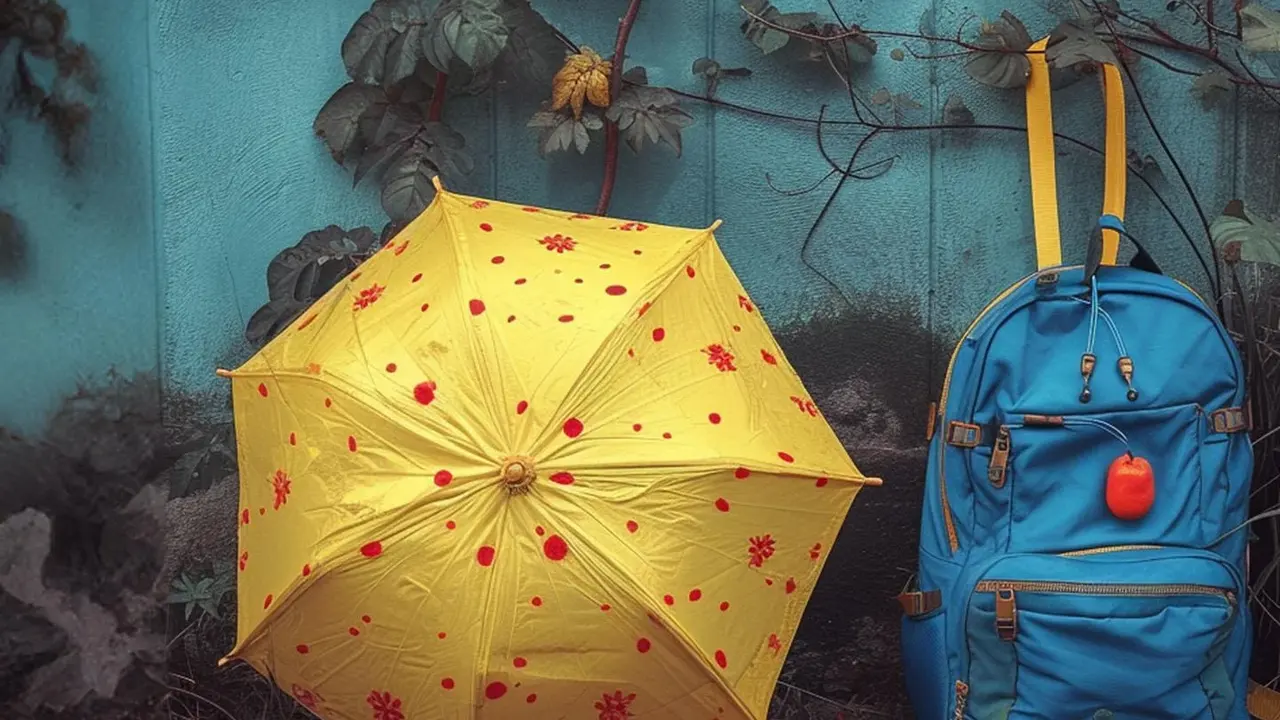
Protecting your belongings is just as important as keeping yourself dry. Start with a lightweight, water-resistant backpack and add a dedicated rain cover for complete protection during heavy showers. Your electronics are most vulnerable. Use zip-lock bags or dedicated waterproof pouches for your phone, power bank, and chargers. Given that power cuts can be more frequent during the monsoons in some areas, a fully charged power bank is an absolute essential. Another game-changer is a quick-dry travel towel. It takes up a fraction of the space of a regular towel and, true to its name, dries in a flash. Finally, a small, sturdy umbrella that can withstand wind is always a good idea for short dashes through the rain.
Toiletries and Health: Small, Solid, and Smart
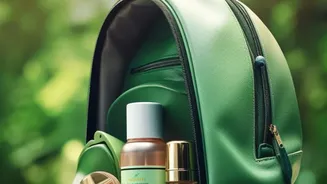
Liquids are heavy and subject to airline restrictions. Lighten your load by switching to solid toiletries. Shampoo bars, conditioner bars, and soap bars work just as well as their liquid counterparts without the bulk or risk of spillage. For anything you must bring in liquid form, use small, reusable travel-sized bottles. Your monsoon first-aid kit should be compact but comprehensive. Include basics like antiseptic wipes, bandages, and pain relievers. More importantly, add items specific to the season: a strong insect repellent to guard against mosquitoes, which are more prevalent in the wet season, and an anti-fungal powder to prevent skin issues caused by dampness.
Packing Technique: Roll, Cube, and Conquer
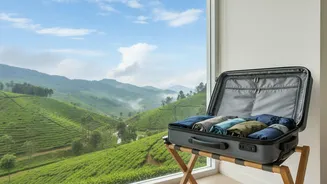
How you pack is as crucial as what you pack. Rolling your clothes instead of folding them is a proven technique to save significant space and minimise wrinkles. To take your organisation to the next level, use packing cubes. These small fabric containers allow you to compartmentalise your clothing (e.g., one for tops, one for bottoms) and compress them down, freeing up even more space. Arrange the cubes inside your bag like a game of Tetris. Place heavier items like your footwear and toiletries at the base of the backpack, closer to your back, for better balance. Stuff smaller items like socks or chargers inside your shoes to utilise every last inch of space.