




Saturn Takes Centre Stage
October kicks off with a showstopper. On October 4, the magnificent ringed planet Saturn reaches opposition. This is an astronomical term meaning Earth is directly between Saturn and the Sun. For us, it means Saturn will be at its closest and brightest
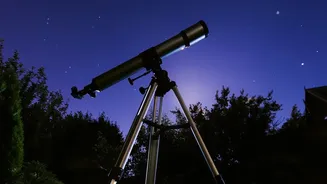
for the entire year, visible all night long. As the Sun sets in the west, look for a brilliant, steady, yellowish point of light rising in the east. While you can easily spot it with the naked eye, a small telescope will reveal its famous rings, which are an unforgettable sight. It will be the brightest object in its patch of sky, making it a perfect target for city and rural observers alike.
A Dance of Moon and Planets
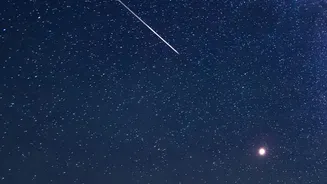
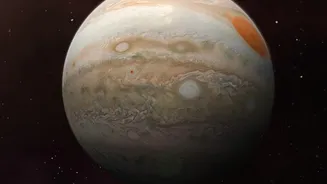
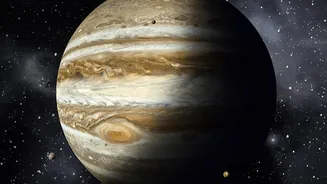
The first week of October features some beautiful pairings. On the morning of October 5, early risers will be rewarded with the sight of a waning crescent Moon cosy near the reddish glow of Mars in the eastern pre-dawn sky. Just a day later, on the morning of October 6, the Moon continues its journey to sidle up next to the giant of our solar system, Jupiter. In some parts of the world, the Moon will even pass directly in front of Jupiter in an event called a lunar occultation. Keep an eye on the eastern sky before sunrise on both days for these serene celestial alignments.
The Draconid Meteor Shower
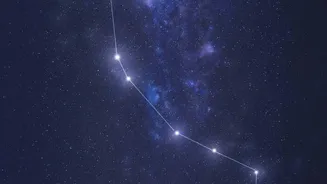
The first of two meteor showers this month is the Draconids, peaking on the evening of October 8-9. Unlike most meteor showers that are best viewed after midnight, the Draconids are an early-evening affair. The best time to watch is just as soon as it gets truly dark. The shower’s radiant point—the spot from which the meteors appear to originate—is in the constellation Draco the Dragon, which is high in the sky after sunset. This year's viewing conditions are fantastic because the peak happens close to the New Moon, meaning the sky will be dark and moonless, making it easier to spot the meteors. While typically a modest shower with about 5-10 meteors per hour, the Draconids are known for occasional surprise outbursts of hundreds of meteors, so it's always worth a look.
The Orionid Meteor Shower
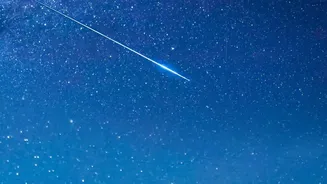
October's grand finale for meteor fans is the Orionid meteor shower, which peaks on the night of October 21-22. These meteors are special because they are tiny pieces of the famous Halley's Comet, burning up in our atmosphere. The Orionids are known for being bright and fast, often leaving persistent trails that can linger for a few seconds. At its peak, you can expect to see between 15 and 25 meteors per hour in a dark sky. The radiant is in the constellation Orion the Hunter. For the best show, find a spot away from city lights and look up after midnight. A bright moon will be in the sky during the evening, but it sets around 3 a.m. local time, leaving the pre-dawn hours dark and perfect for meteor watching.
The Full Hunter's Moon
October's full moon, known traditionally as the Hunter's Moon, will rise on the evening of October 25 and become perfectly full on October 26. This name comes from ancient traditions of it signalling a time for hunting in preparation for winter. Like any full moon, it will be a beautiful sight, rising in the east around sunset and dominating the night sky with its bright glow. While the moonlight isn't ideal for spotting faint deep-sky objects, the sight of a brilliant full moon rising above the horizon is a celestial event in its own right, and one that requires no special equipment to enjoy.