





A New Wave of Coastal Connectivity
India, with its vast 7,500-kilometre coastline, numerous rivers, and island territories, is uniquely suited for water-based aviation. Seaplanes, or amphibious aircraft, are game-changers because they can operate without traditional runways, turning any
suitable water body into a potential airport. This capability fundamentally alters the transport equation for remote areas. For years, many of India’s most beautiful coastal and island locations in places like Lakshadweep and the Andaman & Nicobar Islands have been difficult to access, requiring long ferry journeys. Seaplanes slash this travel time, turning multi-hour sea voyages into short, scenic flights, making these destinations more accessible than ever.
The UDAN Scheme Takes to the Water
This aviation revolution is being significantly propelled by the government's UDAN (Ude Desh ka Aam Naagrik) scheme. Initially focused on connecting unserved and underserved airports, the scheme has expanded to include water aerodromes, providing financial incentives and viability gap funding to airlines willing to operate on these new routes. The government has sanctioned the development of 14 water aerodromes across the country, including sites in the Andaman & Nicobar Islands, Assam, Telangana, Andhra Pradesh, and Lakshadweep. This policy push is crucial, as it makes operations financially feasible for airlines and encourages investment in this nascent sector, with plans for around 150 new seaplane routes.
From Kochi to Lakshadweep: New Routes Take Flight
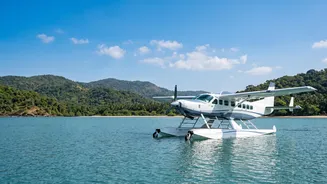
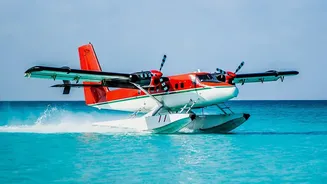
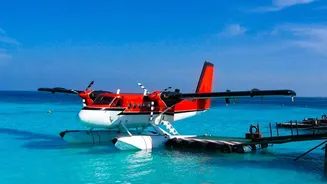
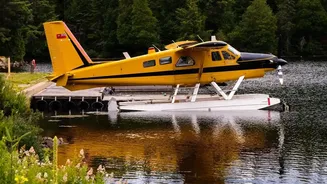
The most significant recent development is the launch of services by SkyHop Aviation, India's first dedicated commercial seaplane operator. After receiving its Air Operator Certificate, the airline has focused its initial operations on connecting the Indian mainland with the Lakshadweep archipelago. Successful trial flights have been conducted between Kochi and islands like Agatti and Kavaratti, demonstrating the operational viability of these routes. These 19-seater Twin Otter aircraft can dramatically cut travel time, connecting the islands with each other and the mainland in minutes rather than hours. Similar plans are underway to connect islands in the Andamans, such as Swaraj Dweep and Shaheed Dweep, and to launch services in the backwaters of Kerala and reservoirs in Uttarakhand.
The Unique Onboard Experience
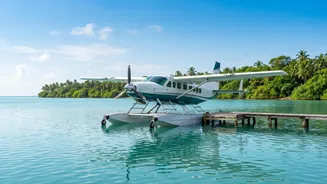
Flying on a seaplane is an experience in itself. The small, intimate cabin of aircraft like the Twin Otter offers a more personal journey. But the real magic happens outside the window. Seaplanes fly at lower altitudes than conventional jets, providing breathtaking, panoramic views of the coastline, coral reefs, and island clusters below. The thrill culminates in the landing, where the aircraft smoothly glides onto the water's surface, taxiing towards a floating jetty. It’s a transition from air to sea that is both exhilarating and uniquely convenient, delivering passengers directly to the heart of waterfront destinations.
A Lifeline for Local Economies
Beyond the novelty for tourists, these new flight routes represent a significant economic opportunity for previously isolated communities. Improved connectivity is expected to deliver a major boost to tourism, creating a ripple effect that benefits local businesses, from homestays and guesthouses to tour guides and artisans. The model has been proven in places like the Maldives, where seaplanes are integral to the tourism ecosystem. For residents of islands, the benefits are even more profound, offering faster access to mainland services like healthcare and education, and providing a reliable transport link that is less susceptible to weather disruptions than ferries.