


What Exactly Is a Slurry?
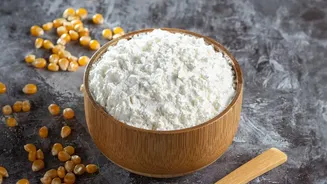
At its heart, a slurry is one of the simplest and quickest ways to thicken a sauce. It is a mixture of a starch, usually cornstarch, and a small amount of cold liquid. The standard ratio is typically one part cornstarch to two parts cold water. This thin
paste is then whisked into a simmering sauce or gravy towards the end of the cooking process. Unlike a roux, which is a cooked mixture of fat and flour that starts a sauce, a slurry is an uncooked addition used to adjust the final consistency. Its primary purpose is to thicken quickly without adding fat or the 'cooked flour' flavour that a roux can sometimes impart.
The Science of the Shine
The magic of a cornstarch slurry lies in a process called gelatinization. Cornstarch is made up of long starch molecules. When these granules are introduced to heat and liquid, they begin to swell and absorb the moisture around them. As the sauce reaches a simmer, around 95°C (203°F), these swollen granules burst and unravel, forming a web-like structure that traps water molecules. This molecular mesh is what thickens the liquid. Because cornstarch is a pure starch without the gluten and proteins found in flour, the resulting gel is translucent. This transparency is what gives the gravy its signature glossy, clear finish, rather than the opaque, matte appearance often created by flour-based thickeners.
The Perfect Slurry: Ratio and Method
Achieving a flawless, lump-free gravy is all about technique. Start with a basic ratio: one tablespoon of cornstarch for every cup of liquid you wish to thicken to a medium consistency. Place the cornstarch in a small bowl, then add two tablespoons of cold water. It is critical to use cold liquid; adding cornstarch directly to a hot sauce will cause the starches on the outside of the powder to gelatinize instantly, forming a barrier that prevents the liquid from reaching the starch inside, resulting in lumps. Whisk the cornstarch and cold water together vigorously until you have a smooth, milky paste with no visible clumps. Ensure your gravy is at a steady simmer, then slowly pour the slurry into the pan while continuously whisking. This constant motion helps disperse the starch molecules evenly before they have a chance to clump together.
Common Mistakes to Avoid
Several common pitfalls can derail your gravy. The most frequent error is adding cornstarch powder directly to the hot gravy. This will create instant, stubborn lumps. Another mistake is not bringing the gravy to a full simmer after adding the slurry. Heat is the catalyst for the thickening process, and without it, the starch granules won't activate properly, leaving you with a thin sauce. It's also important to let the gravy bubble gently for a minute or two after adding the slurry to cook off any residual starchy taste. Be cautious about adding too much slurry at once. It's easier to add more to achieve your desired thickness than it is to thin out a gravy that has become overly gelatinous. Add about half your slurry, stir for a minute, and then assess the consistency before adding more.
Fixing a Lumpy Gravy
If you do end up with lumps, don't despair. The simplest and most effective solution is to strain the gravy through a fine-mesh sieve. This will catch all the unwanted clumps, leaving you with a smooth liquid. If the resulting gravy is too thin because the lumpy starch didn't incorporate, you can then try re-thickening it with a new, properly made slurry. For a more aggressive approach, an immersion blender can be used directly in the pot to break up the lumps and smooth out the sauce. Vigorous whisking can also sometimes break down smaller lumps, but straining remains the most foolproof method for a perfectly silky result.