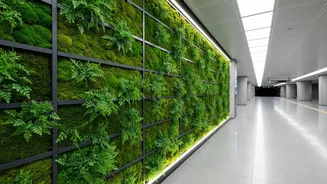







A Green Solution to a Grey Problem
Urban air pollution is one of India's most persistent challenges, and enclosed public spaces like metro stations can concentrate pollutants, including fine particulate matter (PM2.5 and PM10) from outdoor traffic, brake dust, and construction. In response,
several Indian cities are turning to an innovative solution: bio-filtration walls. These are not just decorative vertical gardens; they are active, living systems designed to clean the air. This initiative, seen in cities like Delhi, Kochi, and Bengaluru, aims to transform sterile concrete pillars and walls into functional, air-purifying ecosystems. The goal is to tackle pollution at its source, offering commuters a healthier environment during their daily journeys.
How Do These Living Walls Actually Work?
A bio-filtration wall, also known as a living wall or biofilter, is much more than just plants on a wall. It is an engineered system that leverages a natural process called phytoremediation. While the leaves of the plants can trap some dust and absorb gases like carbon dioxide, the real work happens in the root zone. Contaminated air is actively or passively drawn through the growing medium—the 'soil' that holds the plants. Here, a complex community of microorganisms living on and around the plant roots breaks down harmful pollutants. These microbes effectively 'eat' airborne toxins like formaldehyde and benzene, converting them into harmless byproducts. The plants and microbes work together as a powerful, natural filter.
The Science of 'Phytoremediation'
Phytoremediation is the science of using living plants to clean up soil, water, and air. The concept isn't new—NASA famously studied it for cleaning the air in sealed space stations—but its application in bustling public infrastructure is a significant step forward. Different plants have varying abilities to tackle specific pollutants. Research has shown that species like Spider Plants, Money Plants, and Areca Palms are particularly effective at absorbing common indoor and urban pollutants. The microorganisms associated with the plant roots are key to breaking down volatile organic compounds (VOCs), which are harmful chemicals often found in urban air. This nature-based solution is considered a low-cost, sustainable alternative to traditional, energy-intensive air filtration systems.
More Than Just Cleaner Air
Beyond their air-purifying capabilities, these green installations offer a host of secondary benefits. They have a noticeable cooling effect, helping to combat the 'urban heat island' phenomenon where concrete structures radiate heat and raise ambient temperatures. The presence of greenery in a stark urban environment also has proven psychological benefits, reducing stress and improving the overall commuter experience. Furthermore, these walls can help in noise reduction, absorbing some of the ambient sounds common in busy transit hubs. By turning grey infrastructure green, cities are creating spaces that are not only healthier but also more pleasant and welcoming for their citizens.
Challenges and the Road Ahead
While promising, the implementation of bio-filtration walls is not without its challenges. The selection of the right plant species is crucial; they must be hardy enough to withstand the local climate and the specific pollutants they are meant to target. Maintenance is another key factor. These are living systems that require regular watering, nutrients, and care to remain effective. Some early projects have struggled with plants dying off, requiring replacement and adjustments to the system. However, as the technology evolves, these systems are becoming more robust. With successful pilot projects demonstrating significant reductions in particulate matter, the potential for wider adoption across India's vast public transit network is immense, representing a vital step towards healthier cities.