



The Sun’s Unseen Fury
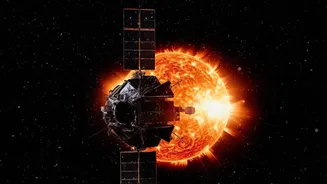
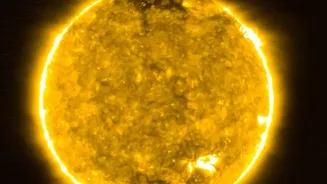
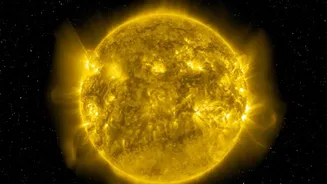
Our star is not always the calm, life-giving orb it appears to be. It periodically releases immense bursts of energy and matter in events known as solar flares and coronal mass ejections (CMEs). A solar flare is an intense eruption of radiation, while
a CME is a massive cloud of magnetised plasma hurled into space. When these phenomena are directed at Earth, they can trigger geomagnetic storms by interacting with our planet's magnetic field. These storms are not just responsible for beautiful auroras; they pose a significant and growing risk to the technological backbone of modern society. A severe event could potentially cost the global economy trillions of dollars.
Satellites in the Firing Line
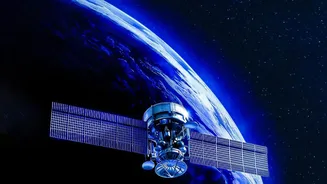
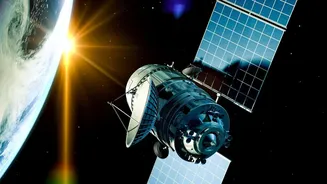
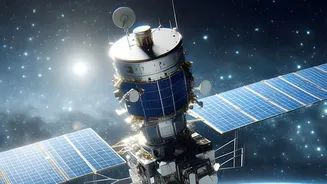
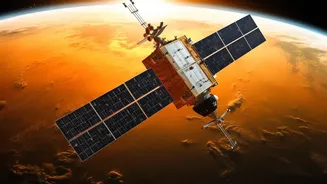
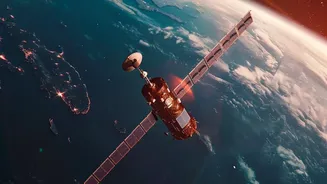
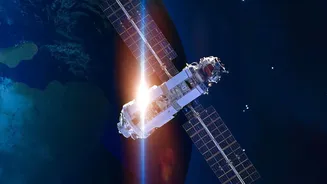
Satellites, particularly those in low-Earth orbit (LEO), are highly vulnerable to the effects of space weather. Geomagnetic storms heat and expand the upper atmosphere, increasing atmospheric drag that can pull satellites off course. The high-energy particles released during a solar event can penetrate a satellite's electronics, causing malfunctions, data corruption, or permanent failure. This can lead to what are known as 'single-event upsets', where a data bit flips from a 0 to a 1, forcing a satellite into a protective 'safe mode' to await instructions from the ground. Furthermore, these storms can disrupt the very signals satellites transmit, degrading the accuracy of GPS systems and interfering with communication networks we rely on for everything from aviation to emergency services.
A New Era of Prediction
For decades, forecasting space weather relied on a limited number of observation points, like the SOHO orbiter launched in 1995, which provided valuable but sometimes delayed data. This often meant warnings for the fastest CMEs came with as little as 15 minutes of lead time. Today, a revolution in tracking technology is underway, driven by artificial intelligence and a new generation of dedicated space weather sentinels. These innovations are shifting forecasting from a reactive to a proactive science, aiming to provide days, not minutes, of advance warning.
The Power of AI Forecasting
Artificial intelligence is proving to be a game-changer. Models like DAGGER (Deep Learning Geomagnetic Perturbation) can analyze real-time data from spacecraft and predict where a solar storm will strike anywhere on Earth with a 30-minute warning. Other AI systems are being trained to automatically detect and characterize solar storms from the torrent of images captured by solar observatories. A model called EarlyDetect, for example, can spot the faint precursor signals of an emerging active region on the Sun an average of nine hours before it becomes visible, providing an even earlier heads-up that a potentially disruptive event could be forming. These AI tools process vast amounts of data at speeds no human could match, identifying subtle patterns that precede major solar events.
An Advanced Fleet of Solar Sentinels
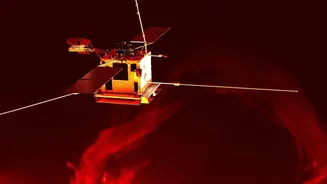
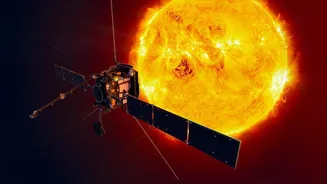
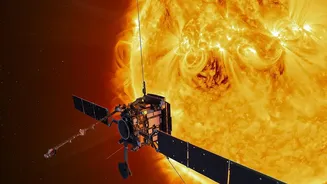
Supporting these AI models is a new fleet of sophisticated hardware. The upcoming GOES-U satellite will carry the first operational compact coronagraph (CCOR), an instrument designed to provide continuous observation of the Sun's outer atmosphere where CMEs originate. Farther out in space, the European Space Agency's Vigil mission, planned for a 2031 launch, will be positioned at a unique vantage point that allows it to see the side of the Sun days before it rotates to face Earth. This will give an unprecedented notice of up to four to five days for certain space weather effects. These missions, along with others like NASA's TRACERS, are designed to work together to provide a comprehensive, multi-layered view of solar activity.
From Warning to Action
These advanced warnings are more than just a scientific curiosity; they enable concrete protective measures. With hours or days of notice, satellite operators can take action to shield their valuable assets. They can reorient satellites to protect sensitive components, temporarily shut down non-essential systems to prevent electrical damage, or even perform small orbital maneuvers to mitigate the effects of increased atmospheric drag. For vital services on the ground, such as power grids and communication networks, this lead time allows operators to prepare their systems for the coming disturbance, helping to prevent widespread outages and disruptions. It’s a crucial link that turns a forecast into a safeguard for our digital world.