







The Current State of Play
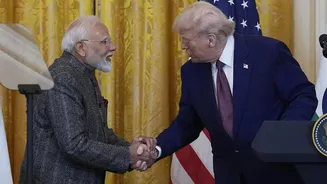
Trade talks between India and the United States have seen a flurry of activity and mixed signals in late 2026. While US Secretary of State Marco Rubio stated during a visit to Mumbai on October 20th that a deal was 'very, very close', Indian Finance Minister
Nirmala Sitharaman had earlier remarked that negotiations had hit a 'plateau'. The core of the discussions revolves around tariffs Washington imposed, which rose as high as 50% on some Indian goods in August 2025. A framework agreed to in February 2026 saw a reduction in the proposed reciprocal tariff rate, but talks have since been complicated by various factors, including India's purchase of Russian oil, which has been a point of tension with the US. Recently, a temporary waiver from the US on certain punitive tariffs has provided some breathing room, but the underlying issues remain unresolved, leaving exporters in a state of suspense.
Key Sectors on High Alert
The impact of these tariffs is not uniform across all industries. Sectors where Micro, Small, and Medium Enterprises (MSMEs) have a significant presence are particularly vulnerable, as these smaller players have less capacity to absorb rising costs. Industries like textiles and apparel, gems and jewellery, and seafood are on high alert. For instance, tariffs on ready-made garments could make Indian products uncompetitive against rivals from countries like Vietnam and Bangladesh, which enjoy more favourable trade terms. The chemicals and steel sectors also face significant headwinds. These industries are heavily reliant on the American market, and the uncertainty makes it difficult for them to forecast demand, manage inventory, and make long-term investment decisions.
The Growth Forecast: A Tale of Two Scenarios
Growth expectations for Indian exporters are now intrinsically linked to the outcome of these negotiations. A favourable deal that brings tariffs down to levels comparable with competing nations could unlock significant growth. Analysts suggest a deal could provide an incremental boost to India's GDP. However, the persistence of high tariffs could have the opposite effect. One report from 2025 projected that continued high tariffs could lead to a significant decline in exports to the US. Despite these challenges, India's overall export performance has shown resilience. For the first half of the 2026 financial year (April-September), merchandise exports to the US actually grew 11.1% to $50.81 billion, though this growth is partly attributed to exporters front-loading shipments to get ahead of potential future tariff hikes.
Navigating Uncertainty: Exporter Strategies
In response to the volatile trade environment, savvy Indian exporters are not just waiting for a resolution. Many are actively pursuing a strategy of market diversification to reduce their dependence on the US. Companies in the textile sector, for example, have been expanding their footprint in Canada, Japan, the European Union, and the UK. This 'derisking' strategy involves balancing revenue flows across different geographic regions. Other strategies include entering into tariff-sharing arrangements with American customers to protect market share and adjusting the product mix to focus on less-affected goods. The overarching goal is to build a more resilient business model that can withstand shocks from any single market, no matter how large.