







From Farm Waste to Battery Fuel
Imagine your next e-bike battery being powered by the leftovers from a farm. That’s the core idea behind a new wave of battery technology that turns agricultural waste into a key component for energy storage. Researchers and several startups are developing
batteries that utilize carbon materials derived from biomass residues like husks, stalks, and even byproducts from paper production. One of the most promising materials is lignin, an organic polymer that gives plants their structure and is abundantly available as a waste product. Instead of burning this waste or leaving it to decompose, which has environmental drawbacks, this technology upcycles it into a high-performance material for batteries, contributing to a circular economy where little is wasted.
The Science of Speed
So, how does crop waste lead to faster charging? The secret lies in the unique structure of the carbon derived from materials like lignin. Traditional lithium-ion batteries often use graphite for their anodes, the negative terminal of a battery. While effective, graphite has a layered structure that can be slow to accept ions during charging. The carbon produced from lignin, however, has a more disordered, amorphous structure full of nanopores. Think of it like a sponge with countless tiny holes. This structure provides a much larger surface area, allowing lithium ions to move in and out far more rapidly. The result is a battery that can handle extremely high charging rates without the risk of overheating or significant degradation, with some prototypes showing the ability to recharge in as little as 60 seconds.
A Greener Alternative
The environmental benefits extend far beyond just reusing waste. Current battery production relies heavily on mining for materials like graphite, cobalt, and nickel, processes which can be environmentally destructive and create supply chain vulnerabilities. By creating a key component from a renewable, plant-based source, this new technology offers a more sustainable path forward. Companies in the space are highlighting that using agricultural byproducts reduces the carbon footprint of battery manufacturing and lessens our dependence on finite resources. Some of these new batteries are designed to be fully biodegradable and can be disposed of with minimal environmental impact, a stark contrast to the hazardous materials in many conventional batteries.
The Rider's Reward: Speed and Safety
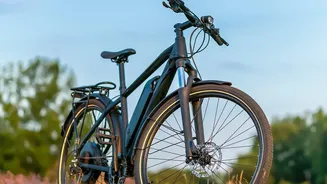
For the everyday e-bike rider, this breakthrough translates into tangible benefits. The most obvious is a dramatic reduction in charging time. While current e-bikes often take four to six hours to fully charge, these new technologies promise to cut that down to mere minutes. This could fundamentally change how e-bikes are used, making them even more convenient for commuting and daily errands. Beyond speed, safety is another major advantage. The unique structure of lignin-based carbon is more stable and less prone to the kind of physical expansion that can degrade batteries over time. It also manages heat exceptionally well, reducing the risk of overheating—a key safety concern for all lithium-ion batteries.
The Road to Reality
While the technology is incredibly promising, it's important to have realistic expectations. Many of these plant-based batteries are still in advanced development or early production stages. Companies like Allotrope Energy and Stora Enso are actively developing lignin-based carbon materials, named Lignavolt and Lignode respectively, for commercial applications, including electric vehicles. Another Indian startup, Nexus Power, is also working on fast-charging biodegradable batteries from crop residue. However, scaling up production to meet the massive global demand for batteries requires significant investment and overcoming engineering challenges to ensure performance and longevity match traditional cells. While they may not replace all battery types overnight, they are expected to enter the market for applications where rapid charging and sustainability are paramount, which is a perfect fit for the booming e-bike industry.