





The perfect pair of trousers can be let down by the wrong hem length. A few centimetres is all it takes to shift an outfit from polished to awkward. Getting the relationship between your trousers and footwear right is the secret to a clean silhouette.
Understanding the 'Trouser Break'
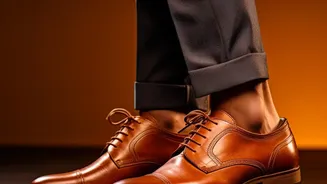
In tailoring, the 'break' is the small fold of fabric that forms where your trouser hem meets your shoe. It is the single most important concept in getting your trouser length right. The amount of break you choose dictates the overall tone of your outfit, from sharp and modern to classic and traditional. There are four main styles: a 'no break' finish is clean and contemporary, with the hem just grazing the top of the shoe. A 'slight break' is the most versatile, with a minimal crease that works for most occasions. A 'medium break' is more traditional, while a 'full break' features a deep fold, best reserved for wider-leg trousers and formal occasions. The width of your trouser leg is key; slim or tapered trousers suit a slight or no-break look, while straight-leg or wide-leg styles can handle more fabric.
For Formal Shoes: Oxfords, Derbies, and Heels
With classic dress shoes like Oxfords and Derbies, or with pointed-toe heels, the goal is a clean, uninterrupted line. For most modern suits and tailored trousers, a slight break is the gold standard. It’s timeless, professional, and ensures the fabric doesn't bunch up over your carefully polished shoes. If you prefer a very sharp, modern silhouette, especially with slim-cut trousers, a 'no break' style where the hem just kisses the top of the shoe is an excellent choice. For wider, more traditional trousers or bootcut styles paired with heels, a longer hem that creates a half or full break is often necessary to make the legs appear longer and ensure the proportions are balanced. The key is to avoid a hem that puddles excessively, which can look untidy.
For Loafers: Showcasing the Shoe
Loafers are low-profile shoes, and the main goal is to show them off, not bury them under fabric. For this reason, an ankle-length or slightly cropped trouser is the ideal partner for a loafer. The hem should end at or just above the ankle bone, leaving a small, intentional gap between the trouser and the shoe. This 'no break' approach looks sharp and deliberate, especially in warmer weather when you might go sockless. This works well with straight-leg trousers, chinos, and cigarette pants. Avoid overly long trousers that 'break' over the loafer, as this can make the shoe look clunky and shorten the leg line. If your trousers are full-length, a neat cuff can achieve a similar, stylish result.
For Sneakers: Casual and Considered
The rules for sneakers are more relaxed but still important. With low-top sneakers, the hem of your jeans or chinos should ideally just touch the top of the shoe with little to no break. This prevents the fabric from bunching over your laces and keeps the look clean. Many people opt to cuff their jeans to achieve this length, which adds a deliberate style element. For high-top sneakers, you have two main options: have the trouser hem end just above the top of the boot to show it off, or wear a straight-leg style that falls neatly over the top of the shoe. Cropped trousers are also a great way to showcase a statement pair of sneakers. The biggest mistake is wearing trousers that are too long, creating a messy pile of fabric around the ankle.
For Boots: Navigating the Shaft
With ankle boots like Chelsea or Chukka styles, the interaction between the trouser hem and the boot shaft is crucial. You want to avoid the trouser leg getting stuck on the top of the boot. For skinny or slim-fit trousers, the hem should ideally hit about an inch above the top of the boot, creating a clean separation. If they are longer, tucking them in (for taller boots) or cuffing them is a good solution. For straight-leg or wider trousers, the hem should be long enough to fall over the boot shaft without bunching. The leg opening needs to be wide enough to accommodate the boot. With bootcut styles, the hem should be longer, covering most of the boot and ending about a half-inch from the floor to elongate the leg.