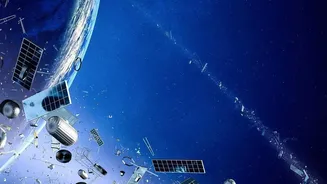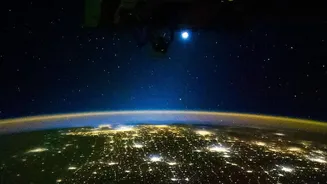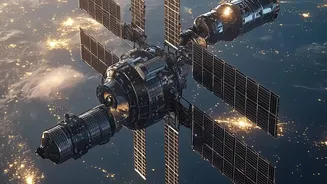




The next great leap for artificial intelligence may not happen on Earth. A new frontier is opening in low-Earth orbit, where companies plan to build vast data centers in space. But this futuristic vision is creating a direct conflict with astronomy.
Why Put Data Centers in Orbit?
The
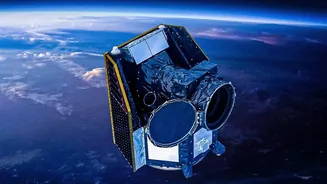
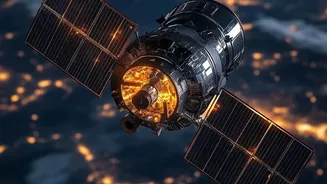
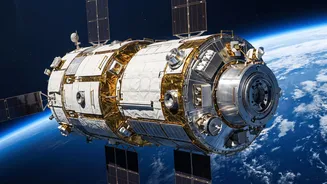
demand for artificial intelligence is creating an energy crisis on the ground. Training and running advanced AI models requires a tremendous amount of electricity and water for cooling, straining power grids and natural resources. Tech companies see a solution in space: constant, powerful sunlight for energy and the vacuum of space for free, efficient cooling. Companies like SpaceX, with its 'Starmind' project, Blue Origin's 'Project Sunrise', and startups like Starcloud and Orbital Compute, are planning to launch tens or even hundreds of thousands of satellites that function as floating data centers. These orbital platforms would process AI workloads in space and beam the results back to Earth, bypassing terrestrial infrastructure bottlenecks entirely.
A Sky Crowded with 'Artificial Stars'
While orbital computing offers a solution to Earth's energy woes, it presents a looming crisis for astronomers. The sheer number of planned satellites is staggering, with some proposals aiming for constellations numbering in the hundreds of thousands, and one SpaceX filing mentioning up to one million satellites. The International Astronomical Union (IAU) and other scientific bodies have warned that if these plans come to fruition, the number of satellites visible in the sky could begin to rival the number of actual stars. This rapid increase in orbital hardware is creating what astronomers call 'industrial pollution' of the night sky, threatening the future of ground-based observation. The problem isn't just about a few extra dots of light; it's about fundamentally altering our view of the cosmos and our ability to study it.
The Twin Threats: Light and Radio Noise
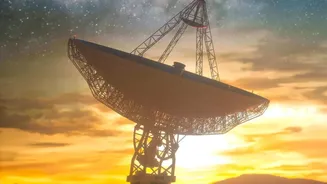
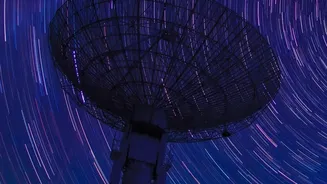
The impact on astronomy is twofold. First, there is light pollution. The reflective surfaces of these satellites catch the sun's rays, creating bright streaks across long-exposure images taken by telescopes. This contamination can render valuable scientific data completely useless. For wide-field surveys, which are crucial for discovering new objects and phenomena, some studies predict that up to 30% or 40% of images taken during twilight hours could be ruined. The problem extends even to space telescopes like Hubble, which could see a significant percentage of its images contaminated. The second threat is radio frequency interference. Satellites broadcast signals that can drown out the incredibly faint, natural radio waves that astronomers study to understand the universe. While some parts of the radio spectrum are protected for astronomy, the sheer volume of new satellites threatens to create a cacophony of noise that overwhelms sensitive instruments.
The Search for a Compromise
The conflict has prompted a search for solutions, though progress is slow. Some satellite operators, like SpaceX, have engaged with the astronomy community and attempted to mitigate the issue by developing less reflective coatings and altering satellite orientations. However, astronomers argue these measures are insufficient to counter the impact of such enormous constellations. The core of the issue is a lack of regulation. Currently, there are no binding international rules governing the impact of satellites on the night sky. Astronomical organisations are now lobbying for new legal frameworks and appealing to bodies like the United Nations to treat orbital space as an environment in need of protection, similar to land, sea, and air. They argue for a hard limit on the number of satellites and enforceable standards for brightness to preserve the sky for future generations.