









The Soundtrack of Solitude
First, consider the sound. A bustling city has a chaotic, sharp-edged soundtrack: the blare of horns, the cacophony of a hundred conversations, the insistent rumble of traffic. Rain changes the acoustics entirely. It introduces a constant, gentle, and
broad-spectrum sound—what sound engineers call 'white noise' or 'pink noise'. This steady patter has a remarkable ability to mask the jarring, unpredictable noises of urban life. The result is a sonic blanket. Your auditory field is no longer being assaulted by disparate sounds competing for attention. Instead, you're enveloped in a single, coherent auditory experience. This is why so many people find the sound of rain calming; it simplifies our sensory input, allowing our minds to wander without the constant distraction of the urban jungle. It creates a private bubble, a portable space of peace that moves with you through the otherwise noisy streets.
A World Washed Anew
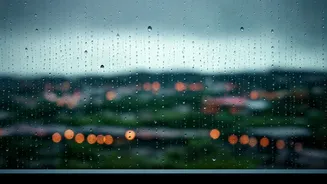
Then there’s the visual transformation. Rain acts like a saturation filter for the real world. Dust and grime are washed away from leaves and pavement, revealing deeper, richer colours. Greys become slate and silver, greens become emerald, and the red of a brick wall takes on a damp, earthy hue. Streetlights and neon signs, often harsh in the dry night, reflect off wet surfaces in long, painterly streaks, turning a mundane street corner into something worthy of a noir film. With fewer people obscuring the view, you are free to notice the architectural details of a building, the elegant curve of a bridge, or the way raindrops bead on a spider's web. The world, momentarily emptied of its usual inhabitants, offers itself up for quiet observation. You’re no longer just a commuter rushing through a space; you become a solitary observer in a temporary art gallery.
The Comfort of Cozy Melancholy
This experience taps into powerful cultural concepts that celebrate quiet and imperfection. It’s a cousin to the Danish concept of 'hygge', which often involves a sense of coziness and contentment while acknowledging inclement weather outside. Being warm and dry while the world is being cleansed by rain creates a feeling of sanctuary. It also resonates with the Japanese aesthetic of 'wabi-sabi'—the appreciation of beauty that is imperfect, impermanent, and incomplete. A rain-slicked, empty street is a perfect embodiment of wabi-sabi. It's not the 'perfect' sunny day, but its transient, moody beauty offers a deeper, more soulful experience. This isn't sadness; it’s a thoughtful melancholy, an acknowledgement of the world’s quiet, fleeting moments that are often lost in the sunshine and crowds.
Reclaiming Public Space, Personally
In our hyper-social, perpetually crowded world, true solitude in public is a rare luxury. A rainy day offers a socially acceptable reason for this emptiness. The park, the monument, the scenic viewpoint that is usually swarming with tourists and selfie-sticks suddenly becomes yours. This isn't an anti-social impulse, but a pro-personal one. Experiencing a well-known place without the pressure of the crowd allows for a more direct and intimate connection to it. You can think your own thoughts without being influenced by the chatter around you. You can feel the history of a place, its atmosphere, its essence. The rain carves out a pocket of time and space just for you, turning a public landmark into a personal memory.