



What Is the 'Tower-Catch' Strategy?
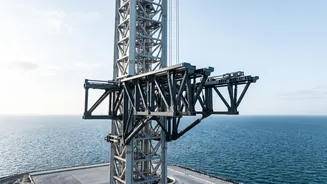
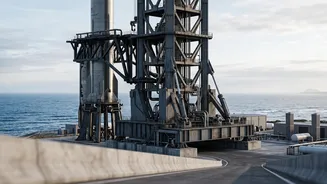
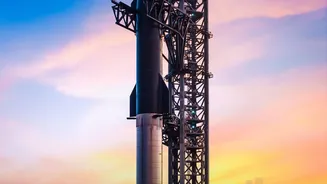
At the heart of SpaceX's Starbase facility in Texas stands a massive launch and integration tower. Attached to this tower is a set of giant, movable arms nicknamed 'Mechazilla' or the 'chopsticks'. The strategy is simple in concept but incredibly complex
in execution: instead of having the Super Heavy booster (the first stage of the Starship system) land on legs like its Falcon 9 predecessor, these arms are designed to catch the returning booster out of the air. The booster performs a controlled descent, slowing itself with engine burns until it's hovering beside the tower. The arms then close in, grabbing the booster at reinforced hardpoints near its grid fins and placing it back on the launch mount, ready for its next mission.
The Genius of Trading Hardware for Ground Systems
The core of this strategy lies in a brilliant engineering trade-off. Rockets are governed by the unforgiving tyranny of the rocket equation, where every gram of mass counts. Adding heavy-duty landing legs, robust enough to support a 70-meter-tall booster, adds significant weight. This is 'dead weight' that has to be launched towards space, reducing the amount of payload—cargo, fuel, or crew—the rocket can carry. By removing the landing legs from the booster, SpaceX shifts that mass and complexity from the flying vehicle to the ground support equipment. The tower and its arms can be made as heavy and robust as necessary because they never leave the ground. This simple trade increases payload capacity and overall launch efficiency, a critical factor for a rocket designed to lift over 100 tons to orbit.
The Need for Speed: Unlocking Rapid Reusability
While mass savings are significant, the primary driver for the tower-catch system is speed. SpaceX's ultimate goal is to make spaceflight operate with airline-like efficiency, which means launching the same rocket multiple times a day. Landing a Falcon 9 booster on a droneship at sea involves a lengthy recovery process: the ship must return to port, the booster must be craned off, transported to a facility, inspected, and then finally moved back to the launch pad. The tower-catch method bypasses nearly all of these steps. By catching the booster and placing it directly back onto the launch mount, the turnaround time could theoretically be reduced from weeks or days to mere hours. This rapid reusability is the only way SpaceX can achieve its ambitious long-term goals, such as building a self-sustaining city on Mars, which would require a fleet of Starships launching in quick succession.
High Risk, High Reward
This innovative approach is not without immense risk. The maneuver requires incredible precision; the guidance systems on the booster must perfectly align its descent with the tower arms, controlling for wind and other atmospheric conditions. A miscalculation of even a small fraction could lead to a catastrophic failure, potentially destroying both the multi-million dollar booster and the critical launch tower infrastructure. Elon Musk himself has called building a fully and rapidly reusable orbital rocket an 'insanely hard problem'. The company has already successfully caught a Super Heavy booster on October 13, 2024, proving the concept is viable. However, the next step of catching the Starship upper stage, which re-enters from orbit at much higher velocities, presents an even greater engineering challenge.